 RACEBOOK 101
 HOW TO BET
 HORSE RACING 101
 TRACK PROFILES
 LIMITS
 FAQ
FAQ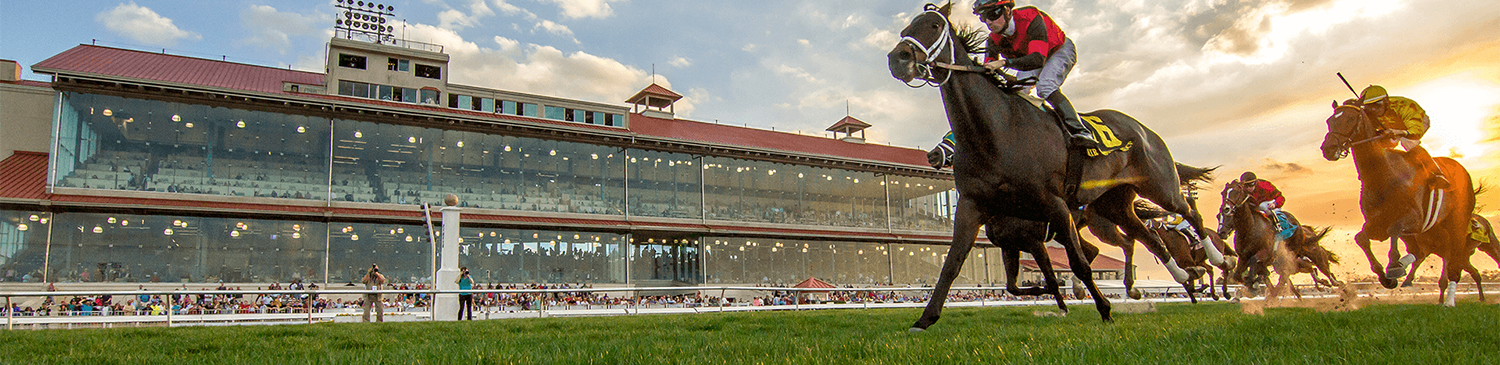
Fair Grounds
If you have any friends at the local tavern who you surmise are casual racing fans, here’s a question that just might win you a round of drinks one evening, especially in August: “Quick, name the oldest racetrack in America?”
It’s odds-on most fans would quickly respond: “Saratoga,” and they would be incorrect. With a nod to our friends on the harness side, the correct answer is Freehold Raceway, which began conducting races in the early 1830's.
For the record, Fair Grounds Racetrack, constructed at the current Gentilly Road location and originally named Louisiana Race Course, was founded on April 10th, 1838. Saratoga Race Course conducted its first races on August 3rd, 1863.
As the nation’s oldest Thoroughbred racetrack, it comes as no surprise that the horsemen who founded the track imported blue-blooded British stock to ensure quality racing. Many of those imports proved to be foundation stallions and remain influential today.
The first was Diomed, who begat Sir Archy, who begat Lexington, a bloodline that courses through the veins of two Triple Crown winners; American Pharoah and another many call the best horse to ever look through a bridle, Secretariat.
Third generation Louisiana horseman John Tayloe II imported Flying Childers son, Childers, whose progeny included many extremely fast runners albeit also known for infirmities. Legendary sire Mr. Prospector traces back through Childers’ offspring.
Like the town, latter day Fair Grounds Racetrack went through many changes, morphing from Louisiana Race Course to Creole Race Course, and back to Fair Grounds through Louisiana Jockey Club auspices which continued to race during the Civil War.
At the turn of the 20th Century, Colonel Matt Winn, the same executive who put the Kentucky Derby and Churchill Downs on the international map, established the Crescent City Jockey Club racing dates that resemble the current December to April calendar.
In 1940, while racing was banned in Louisiana, the property was earmarked for sale until a group of investors saved it from destruction. After a five-year hiatus, racing resumed at the conclusion of World War II.
In 1993 the track burned to the ground. It took four years to rebuild before reopening on Thanksgiving Day, 1997. One year after Churchill Downs Inc. purchased the property in 2004, Fair Grounds was shuttered once more for one year, this time courtesy of Hurricane Katrina. Another Thanksgiving reopening came in 2006.
Meanwhile, Fair Grounds did find time to create racing history. The great race mare Pan Zareta built her legend here and in 1924 Louisiana Derby winner Black Gold proved good enough to win the Golden Anniversary running of the Kentucky Derby.
Black Gold’s Derby was the first time “My Old Kentucky Home’’ accompanied parading horses the Derby post. Both horses are buried in the Fair Grounds infield, along with Tippity Witchet, who, while not a Hall of Famer himself, did answer the starter’s bell on 266 occasions.
Fair Grounds has been a winter home to trainers who prefer crawfish to stone crabs. It made national names of Louisianans Al Stall Jr. and Tom Amoss, as well as other big stagers such as Steve Asmussen, Mark Casse and Brad Cox.
Florent Geroux launched a career and became a national star here. Adam Beschizza, James Graham, Mitchell Murrill are having an excellent 2020-21 season, followed closely by Colby Hernandez and Brian Hernandez Jr.
Fair Grounds in a one-mile dirt oval wrapped around a seven-furlong turf course with nary a chute in sight. Riders are aggressive here and race shapes tend to be lively and contested. Given the dynamics, inside positions enjoy a significant edge.
Field size notwithstanding, inside runners, posts 1 through 5, have a huge advantage. Going short and long on dirt, win percentages are 75.5% and 73.9%, respectively, through January. On turf, posts 1 through 5 account for 66.4% of the victories at any trip.