 RACEBOOK 101
 HOW TO BET
 HORSE RACING 101
 TRACK PROFILES
 LIMITS
 FAQ
FAQ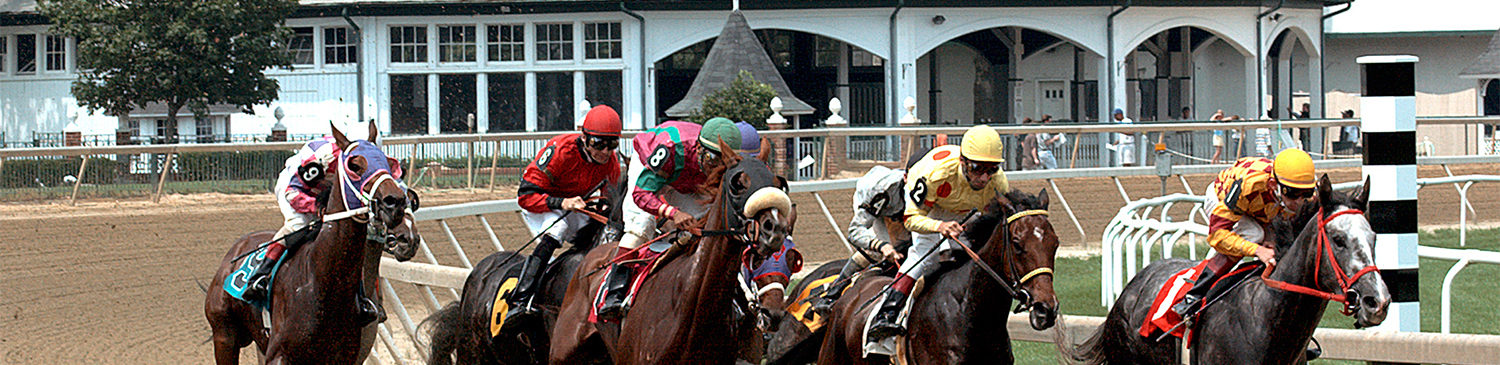
Laurel Park
Not even the most casual fan would confuse Laurel Park with racing’s giants—the Saratoga’s, Santa Anita’s, the Downs of Churchill--but when it comes to racing history, the race course in Laurel, Maryland need not take a back seat to any of the sport’s iconic racetracks. Why?
Three words: “Seabiscuit Prepped Here.”
That might not sound like a big deal, but Seabiscuit’s runnerup finish in the 1938 Laurel Stakes came two weeks before the “People’s Horse” upset Triple Crown champion War Admiral in their storied match, the Pimlico Special, a mere 28 miles to the south.
It’s not like Seabiscuit never won here, taking the 1937 Laurel Stakes one year before winning a horse that stopped a nation, one that provided of measure of relief and excitement for a country in the throes of the Great Depression.
And Whirlaway won here, too. So did Sir Barton. Affirmed, Riva Ridge, five-time Horse of the Year Kelso, who got his Washington D.C. International after three consecutive runnerup finishes. The list of champions didn’t stop there:
The great Spectacular Bid won at Laurel, as did the popular, ill-fated Barbaro. And of course, so did Secretariat, “the best horse to ever look through a bridle.
Laurel Park opened for business in 2011 when influential business and breeder Philip J. Dwyer, along with James Butler, purchased the track and appointed legendary racetrack executive and whiz bang promoter Matt Winn to run it.
After a fruitful run of 29 years, The Maryland Jockey Club, owners of Timonium and Pimlico, bought Laurel and considered shifting the Pimlico meet there, an idea that resurfaced when the track’s present owners, the Stronach Group, considered running the Preakness there.
Eventually, that group created a unique lease agreement which ceded the properties of both tracks to the state for the rights to conduct racing, an agreement that eventually would keep the Triple Crown’s middle jewel right where it was, in Baltimore.
Laurel Park was ready for the next phase, one that would last 34 years beginning in 1950. The Schapiro family acquired the property, changed the name of Laurel Park to Laurel Race Course, and introduced the Washington D.C. International, a mile and a half turf race, an American Arc de Triomphe.
To entice top international competition, the track made enhancements to make the race more attractive to foreigners. It lengthened the seven furlong turf course to one mile, simultaneously expanding the dirt track to a mile and-an-eighth.
In 1984, the DeFrancis family and their partners, including prominent Maryland horseman “Tommy” Manfuso, purchased Laurel from the Schapiros and ushered in a new era, one that included sports entertainment, changing the name back to Laurel Park.
With a new mission, the facility started to change physically and offered fresh vision. The new “Sports Palace” was an innovation, a forerunner to the modern-day race and sports books and racinos where legal. And it didn’t stop there.
Laurel also created a cigar and brandy bar, a simulcast theater with individual betting carrels, another more casual simulcast center and fashioned a space to cater to the track’s VIPs.
Maryland is horse country and sportscaster Jim McKay was its most prominent booster. He thought up a unique way to celebrate the state’s breeding industry and sport, and so the Maryland Million was born, nine races worth an aggregate seven figures. It worked then and still works today.
Together with Pimlico, Maryland provided opportunities for the best local talent to become national stars, immortals of the sport. Hall of Famers Chris McCarron, Edgar Prado and Kent Desormeaux gained celebrity here, as did Sandy Hawley and Ramon Dominguez.
Trainers became some of the game’s giants, horsemen like Richard Dutrow, Buddy Delp, King Leatherbury, Michael Dickinson, and more recently Graham Motion among other outstanding practitioners.
At Laurel, one-mile dirt races are run of out a chute and, like racing in Florida or Southern California, easy leads are rare. Races are highly competitive and the track features no particular style; winners can come from anywhere, a challenge for handicappers everywhere.
The Laurel turf course is world class, the racing dynamics flattering grass specialists at every level. Laurel underscores what it means to be a successful in a less populace region. Laurel may be a “small town” racetrack, but it provides big-time sport.