5 Greatest Single Game MLB Performances of All Time

Summary
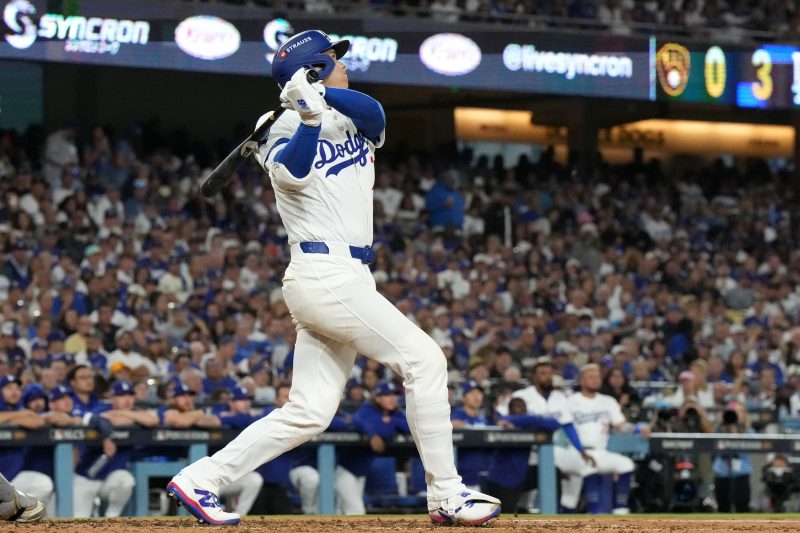
Shohei Ohtani delivered an unprecedented performance in the 2025 NLCS, clinching a World Series berth by hitting three home runs as a leadoff hitter while also pitching six scoreless innings with ten strikeouts. This two-way feat, described as rewriting the laws of baseball, is considered one of the greatest individual displays in postseason history.
Other legendary playoff masterpieces include Don Larsen’s 1956 World Series perfect game, Madison Bumgarner’s five-inning save on short rest in the 2014 World Series clincher, Reggie Jackson’s three home runs on three consecutive pitches in 1977, and Bob Gibson’s third complete-game victory of the 1967 World Series, which included a home run. These moments represent the pinnacle of individual performance when the stakes were highest.
Shohei Ohtani just broke our brains. Again.
What we witnessed in Game 4 of the 2025 NLCS wasn’t just historic—it was the kind of performance that forces you to recalibrate everything you thought you knew about October baseball. As a pitcher-hitter. In a pennant-clinching game. Three home runs. Ten strikeouts. One jaw-dropping legacy moment. It’s the sort of night that sends you diving into the record books, asking one simple question: Where does this rank among the all-time playoff masterpieces?
That search led me down baseball’s most sacred rabbit hole, revisiting the performances that didn’t just win games — they redefined what’s possible when the lights are brightest. We’re talking about the nights when mortals became myths, when the impossible became inevitable, when one player grabbed October by the throat and refused to let go.
These aren’t just the best games — they’re the ones that made us fall in love with October baseball. The ones our grandparents wouldn’t shut up about. The ones that justify staying up past midnight on a work night because you know you’re watching history.
Some will argue with our rankings. Good. That’s half the fun. But after you read what these five legends accomplished when everything was on the line, try telling us anyone else belongs in their company.
Let’s start with the one that forced this whole conversation—because when a player does what Ohtani did, you rethink everything.
1. Shohei Ohtani’s Two-Way Annihilation To Clinch A World Series Birth
A pitcher hitting leadoff in a playoff game already breaks your brain. That same pitcher launching the first pitch he sees into orbit, then striking out 10, then hitting two more bombs to punch a World Series ticket? That’s not baseball — that’s Shohei Ohtani rewriting the laws of physics in real time. October 17, 2025, wasn’t just historic; it was the night we ran out of comparisons to make.
Stat Snapshot
At the Plate: 3-for-3, 3 HR, 3 RBI, 3 R, 1 BB
On the Mound: 6.0 IP, 2 H, 0 R, 10 K, 3 BB
Longest HR: 469 feet (out of Dodger Stadium)
Fastest Pitch: 99.4 mph
Combined WPA/LI: .71 — the most impactful single game ever tracked
Context & Records
This wasn’t just dominance; it was uncharted territory. Ohtani became the first player in MLB history to hit three home runs and strike out 10+ batters in the same game — regular season or postseason. He’s the first pitcher ever to hit a leadoff homer in October, and the only player to homer in a game he both started and won on the mound. It’s a stat line that will require Baseball Reference to create new categories just to fit him in.
Legacy
The Dodgers needed one win for their second straight World Series appearance, and Ohtani personally delivered all of it — first-inning ambush, 469-foot space shot in the fourth, series-clinching blast in the seventh. Dave Roberts called it “probably the greatest postseason performance of all time.” Even Pat Murphy, watching his Brewers season die, could only tip his cap: “Possibly the best individual performance ever in a postseason game.” When the manager you just eliminated is giving you props, you’ve transcended rivalry.
Signature Quote
“Sometimes you’ve got to check yourself and touch him to make sure he’s not just made of steel.”
— Freddie Freeman, Dodgers first baseman, is still processing reality
2. Don Larsen’s Perfect Game — The Untouchable October Afternoon
Don Larsen woke up hungover on October 8, 1956, and decided to throw the only perfect game in World Series history. No hits, no walks, no errors, no baserunners — just 27 Brooklyn Dodgers marching to the plate and 27 walking back to the dugout, wondering what the hell just happened. Against a lineup featuring Jackie Robinson, Roy Campanella, Duke Snider, and Pee Wee Reese, Larsen needed just 97 pitches to achieve baseball immortality. In the biggest spotlight the sport offers, a journeyman pitcher became untouchable.
Stat Snapshot
The Line: 9.0 IP, 0 H, 0 R, 0 BB, 7 K
Pitch Count: 97 (in a complete game!)
Batters Faced: 27 up, 27 down
Three-Ball Counts: One. Total.
Hall of Famers Retired: Five
Context & Records
This wasn’t just the first perfect game in postseason history — it’s still the only one in the World Series. Larsen faced a Brooklyn Dodgers lineup loaded with legends — Robinson, Campanella, Snider, Reese, Hodges — and none reached base. He didn’t allow a single 3-ball count until the third batter of the game, and by the end, he had rewritten what it meant to deliver under pressure. No other pitcher has thrown a perfect game in any round of the postseason. Not Koufax, not Gibson, not anyone. That’s legendary stuff right there.
Legacy
Larsen entered Game 5 having pitched poorly earlier in the Series. What followed was the most stunning turnaround in postseason lore — and the most dominant, efficient, and improbable pitching performance in MLB history. Writers called it “baseball’s Everest.” Teammates called it a miracle. And Mickey Mantle? He called it “the greatest game ever pitched.” No other October moment has stood as untouched, unduplicated, and unforgettable for nearly 70 years.
Signature Quote
“I had great control. I never had that kind of control in my life.”
— Don Larsen, still amazed decades later
3. Madison Bumgarner: The October Machine — 2014 World Series Game 7
Two days after throwing a complete-game shutout, Madison Bumgarner walked back to the mound in Game 7 of the World Series — on the road — and turned into an unhittable pitching machine. Five shutout innings. Seventeen batters. One save. One legacy. He didn’t just win the title — he wrestled it from history’s hands and dared anyone to forget his name.
Stat Snapshot
Role: Relief (entered in 5th inning, 3–2 lead)
Line: 5.0 IP, 2 H, 0 R, 0 BB, 4 K, 68 pitches
Batters Faced: 17 (retired 15 of final 16)
World Series Totals: 21 IP, 0.43 ERA, 2 W, 1 SV
2014 Postseason Total: 52.2 IP, 1.03 ERA — modern October record
Context & Records
Game 7. The series is tied. They are on the road. And Bruce Bochy hands the ball to a 25-year-old workhorse on just two days’ rest. Madison Bumgarner didn’t just answer the call—he delivered one of the most iconic relief efforts in sports history. No one else has ever thrown a five-inning save in a World Series Game 7. Oh, and not to mention, he already had two earlier wins and 21 total innings of complete domination against the Royals. It stands as the most complete individual pitching performance in Fall Classic history.
Legacy
This was an October legend being made in real time for all to see. Bumgarner became the first pitcher to win two games and save Game 7 in a single Series. His 0.25 career World Series ERA? The lowest ever (min. 25 IP). The visuals told the story: Pablo Sandoval sobbing in his arms, Posey speechless behind the plate, a dugout stunned into reverence. Ned Yost, the Royals manager, said it best: “It was hopeless.”
Signature Quote
“He was a machine sent from the baseball gods.”
— ESPN broadcast, postgame
4. Reggie Jackson: The Birth of “Mr. October” — 1977 World Series Game 6
In Game 6 of the 1977 World Series, Reggie Jackson didn’t just deliver under pressure—he detonated Yankee Stadium: five pitches, three swings, three home runs. By the third blast, the crowd was chanting his name before the ball even left the bat. That night, Reggie didn’t just end a 15-year championship drought—he carved out a permanent spot in baseball lore.
Stat Snapshot
Batting Line: 3-for-4, 3 HR, 5 RBI, 4 R, 1 BB
Pitch Breakdown:
- Walk (2nd Inning): 4 consecutive pitch walk
- HR 1 (4th Inning): 1st pitch, 2-run shot off Burt Hooton
- HR 2 (5th Inning): 1st pitch, 2-run shot off Elias Sosa
- HR 3 (8th Inning): 1st pitch, Solo blast off, Charlie Hough
Pitches Thrown To Him: 7 total — walked on 4, homered on the next 3
Series Totals: .450 AVG, 5 HR, 8 RBI, 10 R in 6 games
Context & Records
Jackson became just the second player in MLB history to hit three home runs in a World Series game — and the first to do it on three consecutive pitches from three different pitchers. He scored or drove in 6 of the Yankees’ 8 runs that night. Add in his Game 5 home run, and Jackson went deep on four straight swings to close the Series. This wasn’t just power — it was surgical destruction.
Legacy
That night, “Mr. October” was born. Jackson’s performance didn’t just win the Yankees a title — it etched his name into baseball mythology. The crowd at Yankee Stadium roared “REG-GIE, REG-GIE!” as he rounded the bases. Howard Cosell interrupted the broadcast in disbelief. And decades later, it’s still the benchmark for postseason power-hitting when the lights are hottest.
Signature Quote
“Nothing can top this. Who’s ever going to hit three home runs in a deciding World Series game?”
— Reggie Jackson
5. Bob Gibson: The Complete Game King — 1967 World Series Game 7
In Game 7 of the 1967 World Series, Bob Gibson didn’t just win a title — he closed an entire era of pitching with an exclamation point. On the road, in hostile Fenway, with the weight of the season on his back, Gibson delivered his third complete-game win of the Series and threw in a solo home run for good measure. Dominance? That doesn’t begin to cover it.
Stat Snapshot
Pitching Line: 9 IP, 3 H, 2 R, 3 BB, 10 K, 1 HR allowed
Batting: 1-for-3, solo home run (5th inning)
Series Totals: 3 CG wins, 27 IP, 14 H, 3 R, 26 K, 1.00 ERA
Award: World Series MVP (his second)
Context & Records
This wasn’t just a strong outing — it was the final act of one of the greatest World Series runs ever. Gibson started three games in the series (1, 4, and 7), won them all, and allowed just 14 hits over 27 innings. In Game 7, he struck out 10, hit a home run, and iced the Red Sox’s “Impossible Dream” in front of 35,000 stunned Boston fans. The performance tied Christy Mathewson’s record for fewest hits allowed in three WS complete games — and no one’s matched it since.
Legacy
Gibson didn’t just win — he crushed hope, outdueled the Cy Young winner on short rest, and became a two-time World Series MVP, a feat only three pitchers in history have achieved. With a bat in his hand and the Series on the line, he became the only pitcher in Game 7 history to go the distance and leave the yard. His postseason legacy isn’t just built on dominance — it’s built on defiance. And fearlessness. And finishing what he started.
Signature Quote
“He was the reason we lost — simple as that.”
— Jim Lonborg (Red Sox ace, after Game 7)
Biggest Omissions That Could Crack the Top 5
These aren’t just honorable mentions — they’re legit contenders that had me second-guessing everything. If you squint, they could absolutely belong in the Top 5. Here’s a look at the two closest calls:
Sandy Koufax: The Ice-Wrapped Assassin — 1965 World Series Game 7
Stat Line:
9 IP, 3 H, 0 R, 10 K, CG shutout on 2 days’ rest.
Koufax was in visible pain, relying almost exclusively on his fastball after losing command of his curve. With the Series on the line and only two days to recover from his Game 5 shutout, he summoned one of the most heroic Game 7 efforts in baseball history. The Twins never had a chance.
Why It Was Left Out:
As legendary as Koufax’s performance was, we leaned slightly toward Bob Gibson’s Game 7, which included 10 Ks, a homer, and his third complete-game win of the Series. Koufax was a one-man army in this game, but Gibson’s full-series dominance gave him the narrow edge. Still, Koufax’s Game 7 is arguably the greatest gut-it-out pitching performance ever.
Jack Morris: The Marathon Man — 1991 World Series Game 7
Stat Line:
10 IP, 7 H, 0 R, 2 BB, 8 K, 122 pitches in a World Series clincher.
Morris didn’t just pitch into extra innings — he refused to come out. With the Series on the line, he threw 122 pitches over 10 scoreless innings in a Game 7 that went to the wire. The Twins walked it off in the bottom of the 10th, and Morris walked straight into legend status.
Why It Was Left Out:
This one stings to leave out—because in today’s game, no pitcher is ever going to go 10 innings again in a World Series. What Jack Morris did in ’91 is a relic of another era, and we may never see its like again.
But compared to Bumgarner’s Game 7 save or Larsen’s perfect game, Morris’s line was slightly less clean in execution. It was an epic performance of stamina and will, not overpowering dominance, which makes it remarkable, but just a shade outside the top tier.
Five Nights That Redefined America’s Pastime
So there it is — five performances that turned playoff baseball into mythology. From Ohtani’s two-way destruction that shouldn’t mathematically exist to Gibson’s one-legged war against the A’s, these aren’t just games. They’re the moments that get passed down through generations, embellished at every retelling until you can’t separate fact from legend. Except in these cases, the facts are more ridiculous than any fiction we could dream up.
I know you’re already composing your angry comments, aren’t you? “How dare you leave off David Freese in 2011!” “Kerry Wood’s 20-strikeout game deserves respect!” “Pablo Sandoval’s three-homer night in 2012!” Good. They are all strong arguments. That’s what makes October baseball sacred — we all have that one performance burned into our memory, the one we’ll defend until our last breath.
But here’s the thing: You watched Ohtani do something that had literally never been done. You know Larsen’s perfection still stands alone after nearly 70 years. You’ve seen the Reggie highlights a thousand times and still get goosebumps. These five didn’t just dominate — they did things that required rewriting the record books, creating new statistical categories, or simply throwing up our hands and calling it October magic.