5 Times NHL GMs Gave Up on Young Talent and Watched Them Become Legends

Summary
The Minnesota Wild’s recent acquisition of star defenseman Quinn Hughes, which cost them several high-potential young players, exemplifies a classic NHL dilemma. Teams often trade promising prospects for immediate veteran help, risking long-term success for short-term gains.
History shows this gamble often backfires spectacularly. Examples include Washington trading Filip Forsberg for a brief rental, the Islanders dealing both Roberto Luongo and Zdeno Chara for underwhelming returns, and Toronto swapping Tuukka Rask for short-term goaltending. While Calgary won a Stanley Cup after trading Brett Hull, they lost a Hall-of-Fame scorer. These deals highlight the perennial danger of undervaluing elite young talent.
The Minnesota Wild just made a franchise-altering move, acquiring 2024 Norris Trophy winner Quinn Hughes from Vancouver in a blockbuster that cost them forwards Marco Rossi and Liam Ohgren, defenseman Zeev Buium, and a 2026 first-round pick.
Hughes is a proven superstar — this isn’t a gamble on potential. But Buium? He’s the exact type of high-ceiling, recently drafted young talent featured throughout this article. The kind of prospect teams convince themselves is “expendable” when they’re chasing a championship window.
History is littered with NHL teams who gave up on young players way too early — guys who were in the system, maybe a year or two into their careers, and got shipped out before they hit their prime. Not draft picks before they were made. Not purely speculative future assets. Actual prospects and young NHLers who were already property of the team.
And then? They became superstars. Franchise cornerstones. Hall of Famers. Meanwhile, the teams who dealt them got… well, you’ll see.
Here are five trades where NHL teams gave up on young talent too soon — and paid the price for decades to come.
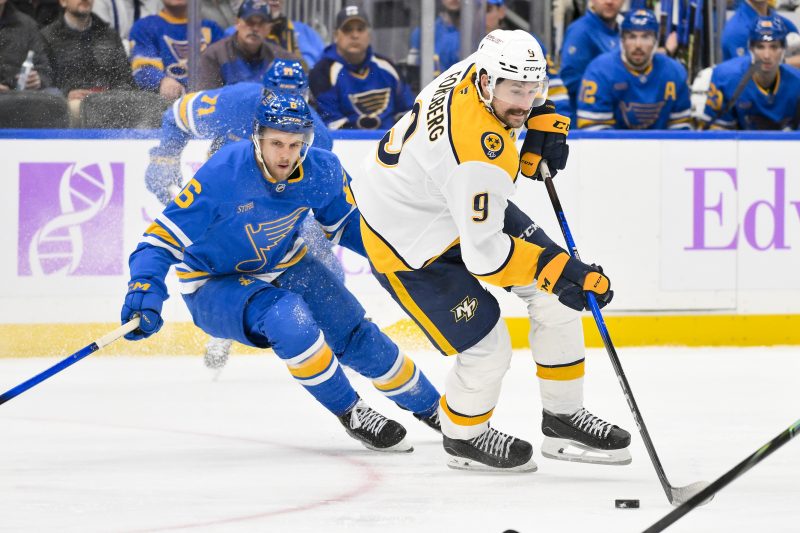
1. Filip Forsberg Traded to Nashville from Washington
The Trade:
April 3, 2013 — NHL Trade Deadline
- Washington receives: Martin Erat (31-year-old winger) + Michael Latta (AHL center)
- Nashville receives: Filip Forsberg (18-year-old winger, 11th overall pick in 2012)
Why Washington Did It:
The Capitals were clawing for a playoff spot and desperate for secondary scoring behind Ovechkin and Backstrom. GM George McPhee wanted a proven NHL commodity who could help now, not a teenager playing overseas who was “at least a year or two away.”
Forsberg, despite being an A-level prospect, hadn’t touched North American ice yet. The uncertainty around translation was real.
McPhee later admitted they didn’t see Forsberg as a “game-changer.” They bet on veteran stability over upside.
How It Played Out:
Martin Erat:
- 2 goals in 62 games with the Caps
- Requested a trade within nine months
Michael Latta:
- 113 NHL games over three seasons
- Fourth-line grinder, zero offensive impact
- Gone by 2015
Filip Forsberg:
- 26 goals as a rookie in 2014-15
- 700+ career points and counting
- Five 30-goal + seasons, including a career-high 48 goals in 2023-24
- Predators all-time leading goal scorer
The Regret Factor:
For Nashville, this was a Hollywood-level heist. David Poile flipped a fading vet and a depth piece into a homegrown superstar — without touching future draft capital.
For Washington, it’s one of the most regretted trades in franchise history. They sacrificed a blue-chip prospect for less than a season of replacement-level production and zero playoff impact. The Caps still won the Cup in 2018 without Forsberg, so it didn’t “ruin” the organization — but it remains a textbook case of overpaying for short-term help while catastrophically undervaluing a near-NHL-ready star.
The sting level? Generational.
2. Islanders Ship Roberto Luongo + Olli Jokinen to Florida
The Trade:
June 24, 2000 — Draft Day
- Florida receives: Roberto Luongo (4th overall pick in 1997, 24 NHL games played) + Olli Jokinen (21-year-old center, 3rd overall pick in 1997)
- New York Islanders receive: Mark Parrish (22-year-old winger, 20-goal potential) + Oleg Kvasha (21-year-old big-bodied project)
Why the Islanders Did It:
That same draft day, GM Mike Milbury used the 1st overall pick on goalie Rick DiPietro, instantly making Luongo “surplus” in his mind. DiPietro was anointed the franchise goalie of the future, and Luongo became expendable overnight.
Jokinen hadn’t broken out offensively yet despite being a top-three pick. The Isles didn’t want to wait. They gave up on the upside, betting he’d never put it together.
Ownership and management were under pressure to show progress fast. Milbury’s approach: trade high-ceiling young players for “NHL-ready now” pieces, a pattern that defined his disastrous tenure.
How It Played Out:
Mark Parrish:
- Best season: 30 goals in 2001-02
- Solid complementary scorer, multiple 20+ goal years
- Traded after five seasons
Oleg Kvasha:
- Never cracked 40 points in a season
- Drifted out of the league by 2006
The DiPietro factor:
- Injuries and inconsistency derailed his career — he never became that guy
Roberto Luongo:
- Set career team records for games, wins, saves, and shutouts
- Multiple Vezina Trophy nominations
- Played 1,044 NHL games — 4th most by a goalie all-time
- Hall of Fame inductee (2022)
Olli Jokinen:
- 30+ goals in three straight seasons (2005-08)
- Multiple 70+ point campaigns
- Named team captain, became the offensive focal point
The Regret Factor:
For Florida, they turned two good-but-not-elite forwards into a franchise goalie and a franchise center, exactly the building blocks they needed.
For the Islanders, it’s one of the worst trades in club history — often cited among the worst in NHL history, period. They surrendered a future Hall of Fame goalie and a 30-goal captain at age 21 for pieces who provided only short-term, mid-tier value.
It encapsulates the Milbury era: chasing quick fixes, misjudging young talent, and paying a catastrophic long-term price for impatience.
The sting level? Milbury Masterclass of Mistakes.
3. Zdeno Chara + 1st-Round Pick to Ottawa for Alexei Yashin
The Trade:
June 23, 2001 — Draft Day
- Ottawa receives: Zdeno Chára (24-year-old, 6’9″ defenseman still developing) + 2001 1st-round pick (Jason Spezza) + Bill Muckalt (depth forward)
- New York Islanders receive: Alexei Yashin (27-year-old center, former 40-goal scorer)
Why the Islanders Did It:
The Islanders were stuck in basement-dweller purgatory and desperate for a marquee name to legitimize the franchise overnight. GM Mike Milbury saw Yashin as a ready-made, high-scoring centerpiece — a guy who could sell tickets and anchor the top line immediately.
In New York, Chara had mainly played a defensive, third-pair role. Management saw him as big and raw, but limited offensively — a useful bruiser, not a future Norris contender. They undervalued his upside to say the least.
The 2nd-overall pick was valuable, sure, but the Isles treated it as expendable. They wanted to win now, not wait for an 18-year-old to develop. Ownership was willing to spend big — Yashin immediately signed a front-loaded, 10-year, $87.5 million deal, one of the richest contracts in NHL history at the time.
How It Played Out:
Alexei Yashin:
- Best season: 75 points in 2001-02
- Never replicated his Ottawa peak year
- Contract became an albatross as his production and influence waned
Zdeno Chára:
- Minutes and responsibilities soared in Ottawa — became a top-pair anchor
- Left for Boston in 2006 as a UFA (Ottawa’s own mistake)
- Won Norris Trophy (2009)
- Stanley Cup champion (2011) as Bruins captain
- Played over 1,600 NHL games
- Hall of Fame inductee (2023)
Jason Spezza (drafted 2nd overall with NYI’s pick):
- Developed into Ottawa’s long-term No. 1 center
- Multiple 80+ and 90+ point seasons
- Core piece of Ottawa’s 2007 Stanley Cup Final run
- Spent over a decade as a franchise pillar, 995 career points
The Regret Factor:
Call it what it was: outright robbery. Ottawa turned a fading star with baggage into a top-pair D, a franchise center, and a legit playoff core.
For the Islanders, it’s a catastrophic long-term loss. They paid an enormous future price for a brand-name center, lost both a Norris-caliber defenseman and a 90-point franchise center, and ended up with a cap-crippling buyout that lingered for years.
The sting level? Another Hall of Fame-level Milbury blunder. Literally.
4. Tuukka Rask to Boston for Andrew Raycroft
The Trade:
June 24, 2006 — Draft Day
- Toronto receives: Andrew Raycroft (26-year-old goalie, former Calder Trophy winner)
- Boston receives: Tuukka Rask (19-year-old goalie, 21st overall pick in 2005)
Why Toronto Did It:
The Leafs had just missed the playoffs in 2005-06. Their core — Mats Sundin and other veterans — was aging, and management wanted to push back into contention immediately rather than rebuild. They needed a starting goalie — and they weren’t waiting around.
Toronto had two highly-touted goalie prospects in their system: Rask and Justin Pogge. Both were coming off strong junior/WJC performances. The Leafs chose Pogge as their future, making Rask “expendable” in their eyes.
How It Played Out:
Andrew Raycroft:
- 2006-07: Set a franchise record with 37 wins, but the underlying numbers were mediocre
- Despite the win total, Toronto still missed the playoffs
- In 2007-08, performance dipped significantly, and he lost the starting job
- Bought out after just two seasons and gone from the organization
Justin Pogge (the guy they chose over Rask):
- Never established himself as an NHL starter
- Left Toronto with no long-term solution in net from either path
- Played a total of 7 NHL games in his career, ouch
Tuukka Rask:
- Boston left him in Europe and the AHL to develop patiently
- Became Boston’s long-term No. 1 starter in 2009-10
- Vezina Trophy (2014)
- Stanley Cup champion (2011) — backed up Thomas during the run, then became the starter for Boston’s 2013 Cup Final appearance
- Career .921 save percentage over 15+ seasons
- 5 times landed in the top 5 for wins
- Franchise leader or near-leader in several goaltending categories
- Cornerstone of Boston’s sustained competitiveness throughout the 2010s
The Regret Factor:
For Boston, this is one of the best trades in franchise history. They extracted a cornerstone goalie from a rebuilding Leafs team desperate for short-term help.
For Toronto, it’s widely labeled one of the worst trades in franchise history — and one of the worst goalie trades in modern NHL history. They sacrificed a potential franchise goalie for two short, uneven seasons from Raycroft and received no lasting value. It symbolizes the Leafs’ reluctance at the time to commit to a true rebuild, their catastrophic mis-evaluation of goaltending prospects, and the damage done by chasing immediate help at the expense of elite upside.
The sting level? Maximum pain. Textbook example of overvaluing short-term certainty and undervaluing high-ceiling youth. Not hard to see why this franchise is still waiting for its first cup since 1967.
5. Brett Hull to St. Louis in 1988
The Trade:
March 7, 1988 — Trade Deadline
- St. Louis receives: Brett Hull (23-year-old sniper, 57 NHL games played) + Steve Bozek (depth forward)
- Calgary receives: Rob Ramage (veteran defenseman, former 1st overall pick) + Rick Wamsley (29-year-old backup goalie)
Why Calgary Did It:
The Flames were leading the Smythe Division and pushing hard for a Stanley Cup. They needed veteran reinforcements — a physical, experienced defenseman to bolster the blue line for the playoffs and a steady backup to tandem with Mike Vernon in net.
Despite Hull’s strong rookie production (50 points in 52 games in 1986-87), Calgary had doubts about his NHL future. He was viewed as inconsistent, out of shape, and more of a power-play specialist than a complete player. The Flames had forward depth — Joe Mullen, Hakan Loob, and others — so Hull felt expendable.
Management prioritized immediate playoff help over long-term potential. The mindset was depth over youth on a contending team.
How It Played Out:
Rob Ramage:
- Played key minutes in the 1988 playoffs
- Contributed to Calgary’s Stanley Cup win that spring, scoring in the Final
- Played two more solid seasons, then declined and was traded
Rick Wamsley:
- Backed up Mike Vernon effectively in the regular season
- Appeared in 111 games over five years (53-43-15)
- Flipped in a multi-player deal by 1992
The short-term result: Calgary got what they wanted — a Stanley Cup in 1989. The trade delivered immediate playoff help and a championship.
Brett Hull:
- 1988-89 (first full season): 41 goals
- 1989-90: 72 goals
- 1990-91: 86 goals — 3rd-most in a single season in NHL history
- 3x 70+ goal seasons, multiple 50+ goal campaigns
- Hart Trophy (1991), Lady Byng Trophy (1990)
- 527 goals, 936 points in 744 games with St. Louis — franchise records
- 741 career goals (4th all-time)
- Later won two Stanley Cups (Dallas 1999, Detroit 2002)
- Hockey Hall of Fame inductee (2009)
- No. 16 retired by the Blues — became the face of the franchise and one of the greatest pure goal-scorers in NHL history
Steve Bozek:
- Minimal impact post-trade with Blues, only 7 games with the franchise
- Journeyman NHL player with 641 career games played
The Regret Factor:
For St. Louis, it was a franchise-defining win. They landed a Hall of Fame icon in Brett Hull for two solid veterans who left no lasting mark. Hull went on to become the face of the Blues for over a decade.
For Calgary, it’s a pyrrhic victory. Yes, they won the Cup in 1989 — the trade “worked” in the immediate sense. But they gave up a 23-year-old who was about to become one of the most prolific scorers in NHL history.
The sting level? Softened by the ’89 Cup, but still one of the biggest “what ifs” in Flames history. They traded a future Hall of Famer in his prime years for short-term rentals.
Honorable Mentions: Three More That Still Sting
1. Tyler Seguin to Dallas (2013)
Boston dealt the 21-year-old second overall pick (plus Rich Peverley and Ryan Button) to Dallas for Loui Eriksson, Reilly Smith, Joe Morrow, and Matt Fraser over concerns about off-ice maturity. Seguin immediately became a franchise centerpiece in Dallas with seven straight 70+ point seasons and a 40-goal campaign, while none of Boston’s return became long-term core pieces. Still debated on Boston sports radio a decade later.
2. Markus Naslund to Vancouver for Alek Stojanov (1996)
Pittsburgh traded the 22-year-old Naslund straight up for enforcer Alek Stojanov, chasing size and grit over skill. Naslund became Vancouver’s captain, a three-time First Team All-Star, and still ranks third in franchise points. Stojanov played 45 games and scored 2 points before washing out of the league. One of the most lopsided one-for-ones in NHL history.
3. Cam Neely + 1987 1st (Glen Wesley) to Boston for Barry Pederson (1986)
Vancouver gave up 21-year-old power forward Cam Neely and a first-rounder (3rd overall, became Glen Wesley) for injury-plagued center Barry Pederson. Neely became a Hall of Fame prototype power forward with his number retired in Boston, while Wesley anchored their blue line for years and won a Cup in Carolina. Pederson gave Vancouver two mediocre seasons before fading. One of the greatest trades in Bruins history, one of the worst in Canucks history.