The 5 Greatest Regular Seasons in NHL History—And How They All Ended

Summary
The Colorado Avalanche are currently on a historic pace, leading the NHL with an outstanding record. However, regular-season dominance is no guarantee of playoff success, as proven by several legendary teams that ultimately fell short.
The 1976-77 Montreal Canadiens and 1983-84 Edmonton Oilers are celebrated as true legends because they capped their dominant regular seasons with Stanley Cup victories. In stark contrast, the record-setting 2022-23 Boston Bruins, the 2018-19 Tampa Bay Lightning, and the 1995-96 Detroit Red Wings all suffered shocking early playoff exits despite their regular-season brilliance. This history serves as a reminder that a team’s ultimate legacy is defined by winning the championship, not regular-season records.
The Colorado Avalanche are making history in real time. Through 34 games, they’ve posted a 25-2-7 record, sit first in the NHL with 57 points, and are riding a goal differential (+57) that would make even the dynastic Canadiens nod in approval.
But here’s the thing about chasing perfection in hockey: the road is littered with cautionary tales.
The 2022-23 Bruins set the all-time wins and points record, then got swept in Round 1. The 2018-19 Lightning tied the wins mark and ran a historically lethal power play, only to become the punchline of the decade with a first-round flameout. Even the 1995-96 Red Wings—62 wins, Scotty Bowman, a Hall of Fame roster—fell short when it mattered most.
Regular-season dominance doesn’t guarantee playoff success. In fact, it barely predicts it. So as the Avalanche continue their march toward history, it’s worth looking back at the greatest regular seasons ever—and asking the question that separates legends from footnotes: Did they finish the job?
Here are the five most dominant regular-season teams in NHL history, the stars who powered them, the records they shattered—and what happened when it was all said and done.
1) 1976-77 Montreal Canadiens: The 60-Win Juggernaut
Before the salary cap and league parity, there was pure dominance — and no team embodied it more than the 76–’77 Canadiens. They didn’t just win. They crushed the league.
Quick Snapshot
- Record: 60-8-12 (132 points, .825 points%)
- Goal Differential: +216 (387 GF, 171 GA)—an NHL record
- Home/Road: 33-1-6 at the Forum, 27-7-6 away
- League Ranks: 1st in goals for, 1st in goals against
The Regular Season: Talent Meets System
Montreal fielded two 100-point scorers, a Norris-caliber defenseman who put up 85 points, and a goaltender who went 41-6-8 with a 2.14 GAA. That’s not a hockey team—that’s a cheat code.
Guy Lafleur was the engine, posting 136 points and carrying the offense with a blend of speed and finishing touch that made him impossible to game-plan against. Steve Shutt flanked him with 60 goals, giving Montreal the kind of dual-threat first line that forced opponents to pick their poison. On the back end, Larry Robinson (85 points, +120) and Guy Lapointe (76 points) turned the blueline into a second power play, while Ken Dryden stood tall with 10 shutouts and made the crease a no-fly zone.
Scotty Bowman’s system didn’t rely on individual brilliance; it weaponized collective execution. The result? They lost eight games all season, earned at least a point in 72 of 80, and posted the widest goal differential in modern history.
The Playoffs: Zero Drama
Montreal entered the playoffs as the prohibitive favorite and never let variance creep in. They swept St. Louis 4-0 in the quarterfinals, handled the Islanders 4-2, then swept Boston in the Final to capture the Cup. Twelve wins, two losses, no series longer than six games.
Elite at both ends. A Hall of Fame goalie. No injuries. That ’77 Habs team was built so well, luck didn’t matter — and heavy Cup chalk actually paid off.
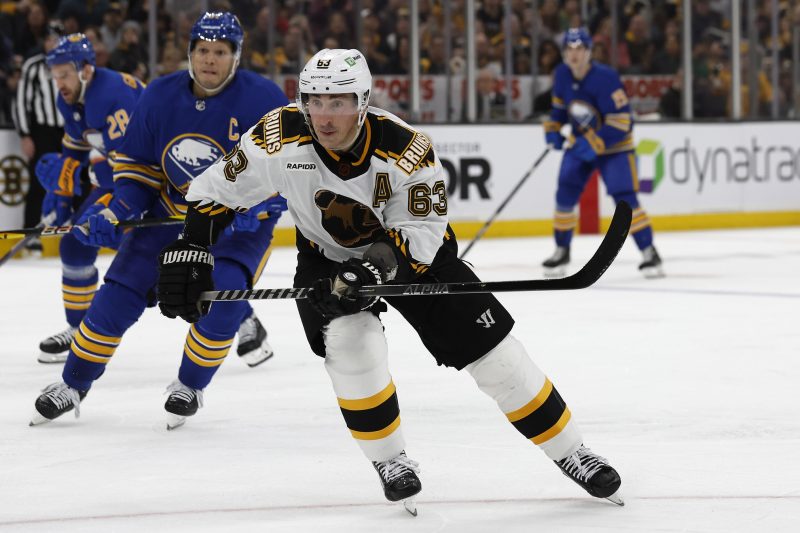
2) 2022-23 Boston Bruins: The Record Breakers
It was the best regular season ever — and it meant nothing. The Bruins crashed out early, proving that regular-season dominance guarantees nothing in the postseason.
Quick Snapshot
- Record: 65-12-5 (135 points, .823 points%)—NHL records for wins and points
- Goal Differential: +127 (301 GF, 174 GA)
- Home/Road: 34-4-3 at TD Garden, 31-8-2 away
- League Ranks: 2nd in goals against, top-5 in goals for
- Special Teams: 22.2% power play, 87.3% penalty kill
The Regular Season: Every Line, Every Pairing, Every Save
David Pastrnak torched the league for 61 goals and 113 points, anchoring a power play that converted at better than one-in-five. Brad Marchand (67 points in 73 games) and Patrice Bergeron (58 points, Selke-caliber defense in his swan song) gave Boston a first line that could match up against anyone while still tilting the ice offensively.
The blueline was just as loaded. Hampus Lindholm (53 points, +49) and Charlie McAvoy (52 points) formed a top pair that could transition, defend, and quarterback the attack. Behind them, depth pieces like Matt Grzelcyk and Derek Forbort kept mistakes to a minimum and let the forwards take chances.
But the real story was between the pipes. Linus Ullmark posted Vezina numbers and shared the Jennings Trophy with Jeremy Swayman as Boston allowed the fewest goals in the league. Jim Montgomery, in his first year behind the bench, cranked up the offensive aggression without sacrificing structure. The result was a team that started 14-0 at home, became the fastest to 50 wins, and shattered the records for total wins and points in a single season.
The Playoffs: The Collapse That No One Saw Coming
Boston entered the playoffs as the overwhelming favorite and took a 3-1 series lead over the eighth-seeded Florida Panthers. Then the wheels came off.
Injuries and illness thinned the blueline. Ullmark’s save percentage dipped from historic to mortal. Florida’s heavy forecheck and timely scoring flipped a handful of one-goal games, and suddenly the series was tied. Game 7 went to overtime in Boston—and the Bruins lost at home.
The Bruins steamrolled the league for six months — then collapsed under the weight of a first-round upset. It wasn’t just a loss. It was a reminder: dominance means nothing if you can’t finish.
3) 1995-96 Detroit Red Wings: The 62-Win Russian Machine
Before Boston broke the record, the Wings owned it. Sixty-two wins, 131 points, a roster stacked with future Hall of Famers, and Scotty Bowman orchestrating the whole thing like a symphony.
Quick Snapshot
- Record: 62-13-7 (131 points, .799 points%)—NHL record for wins at the time
- Goal Differential: +144 (325 GF, 181 GA)
- Home/Road: 36-3-2 at Joe Louis Arena, 26-10-5 away
- League Ranks: 2nd in goals for, 2nd in goals against
- Special Teams: 21.3% power play (4th), 88.3% penalty kill (1st)
The Regular Season: Depth, Skill, and the Russian Five
Sergei Fedorov led all forwards with 107 points and won the Hart Trophy, blending elite playmaking with two-way wizardry. Steve Yzerman (91 points) captained the ship with his usual mix of grit and skill, while Brendan Shanahan—acquired midseason—added 52 goals and a physical edge that made Detroit dangerous in every zone.
On the blueline, Paul Coffey (81 points) quarterbacked the power play and pushed the pace in transition, while a young Nicklas Lidstrom (64 points) was already showing Norris-caliber shutdown ability. Chris Osgood went 29-11-2 in net, giving the Wings steady goaltending behind the league’s best penalty kill.
But the real innovation was in the system. Bowman’s “Russian Five” unit—Fedorov, Vyacheslav Kozlov, and others—revolutionized puck possession with constant motion and chemistry that opposing defenses couldn’t crack. Fourteen players hit 40+ points. The Wings led the league in shot share, crushed teams at home (36-3-2), and went on multiple 10+ game win streaks. This wasn’t just a great team—it was the deepest, most complete roster in hockey.
The Playoffs: They Ran Into An Avalanche
Detroit rolled through Winnipeg (4-2) and swept St. Louis (4-0) to reach the Western Conference Final. Then they ran into Colorado—and Patrick Roy.
The Avs had elite top-end talent and a Hall of Fame goalie playing out of his mind. Detroit’s power play went cold, and they couldn’t crack Roy at 5-on-5. Key moments broke Colorado’s way — and the series was over in six.
The Wings had the better regular season. They probably had the deeper roster. But when you’re facing a hot goalie and a team built to counter-attack, variance plays a role. They won the Cup the next year — but this season left a scar. Regular-season greatness doesn’t buy postseason mercy.
4) 2018-19 Tampa Bay Lightning: Greatest Choke Of Them All
Tie the wins record. Lead the league in goals. Run the most lethal power play in decades. Win the Presidents’ Trophy by a mile. Then get swept in the first round by a wild-card team.
Quick Snapshot
- Record: 62-16-4 (128 points, .780 points%)—tied the modern wins record
- Goal Differential: +98 (319 GF, 221 GA)
- Home/Road: 32-7-2 at Amalie Arena, 30-9-2 away
- League Ranks: 1st in goals for, 5th in goals against
- Special Teams: 28.2% power play (1st, historic), 85.3% penalty kill (top-5)
The Regular Season: Firepower at Every Position
Nikita Kucherov torched the league for 128 points, winning the Hart Trophy and the scoring title while quarterbacking a power play that converted at better than one-in-four. Steven Stamkos (96 points) returned from injury to anchor the top line, and Brayden Point (89 points, 41 goals) gave Tampa a second-line center who could take over games.
Victor Hedman won the Norris Trophy with 65 points playing 25+ minutes a night as the ultimate two-way defenseman. Andrei Vasilevskiy posted a .925 save percentage and solidified his status as an elite goaltender. Fourteen players hit 40+ points. The depth was absurd.
Jon Cooper’s system was built for speed and skill. Tampa attacked in waves, transitioned with precision, and punished mistakes on the man advantage. They won 30 games on the road. They were the prohibitive Cup favorite by every metric—regular season dominance, underlying numbers, star talent, depth, and coaching.
Then the playoffs started.
The Playoffs: When Everything Goes Wrong
Columbus came in as the eighth seed and immediately punched Tampa in the mouth. The Blue Jackets forechecked aggressively, clogged passing lanes, and turned every shift into a battle. Victor Hedman was banged up. Tampa’s power play—historically dominant all season—went ice cold.
Down 2-0 in the series, the pressure mounted. Tampa pressed. Columbus capitalized. By Game 4, the body language told the story—this wasn’t a team battling back, it was a team unraveling. The sweep was complete, and the greatest regular season in modern history became a punchline.
Injuries mattered. But the real lesson was brutal in its simplicity: playoff hockey is a different beast, and the regular season means nothing if you can’t adapt. Tampa would go on to win back-to-back Cups, silencing every doubt. But this season? It’ll always be remembered as the biggest collapse in Lightning history.
5) 1983-84 Edmonton Oilers: The 446-Goal Explosion
Wayne Gretzky scored 87 goals and put up 205 points. Paul Coffey had 126 points from the blueline. The Oilers scored 446 times in 80 games—an NHL record that still stands
Quick Snapshot
- Record: 57-18-5 (119 points, .744 points%)
- Goal Differential: +132 (446 GF, 314 GA)—NHL record for goals in a season
- Home/Road: 32-6-2 at Northlands Coliseum, 25-12-3 away
- League Ranks: 1st in goals for by a mile
- Special Teams: ~25.5% power play (elite for the era)
The Regular Season: Gretzky, Speed, and Chaos
Wayne Gretzky posted his second straight 200-point season, winning the Hart and Art Ross trophies with 87 goals and 118 assists. Jari Kurri (113 points) flanked him as the perfect one-timer weapon, while Mark Messier (101 points) provided secondary scoring and the physical edge that made Edmonton impossible to match up against.
Paul Coffey rewrote what a defenseman could do, putting up 126 points—an NHL record for the position at the time—by turning turnovers into instant offense with his skating and vision. Glenn Anderson (105 points, 54 goals) gave the Oilers a third elite finisher, and Grant Fuhr, despite a 3.87 GAA, made the saves that mattered in a system designed to outscore problems rather than prevent them.
Glen Sather wore two hats as coach and GM, unleashing an up-tempo, skill-driven attack that prioritized transition and odd-man rushes. The Oilers went on multiple 10+ game win streaks, dominated at home (32-6-2), and overwhelmed opponents with wave after wave of talent. This was the evolution of the franchise—from high-flying Cup Finalists in 1983 to legitimate champions in 1984.
The Playoffs: Dethroning the Dynasty
Edmonton swept Winnipeg 3-0 in Round 1, survived a tough seven-game series against Calgary, then swept Minnesota 4-0 to reach the Final. Waiting for them: the four-time defending champion New York Islanders.
In just five games, the Oilers ended a dynasty and launched one of their own. The torch wasn’t passed — it was taken. Gretzky had 47 playoff points. Coffey ran the power play. Fuhr made the timely stops. Edmonton proved that elite offensive talent, when paired with just enough structure and clutch goaltending, could survive the postseason gauntlet.
The Oilers showed that you don’t need to be the best defensive team to win it all. You just need to be good enough to survive, then let your stars take over. And when those stars include some of the greatest players in hockey history, I’d say that’s usually enough.
Conclusion: The Difference Between Great Seasons and All-Time Legacies
The numbers don’t lie—but they don’t tell the whole story, either. Regular-season dominance is impressive. It’s historic. It deserves recognition. But in the end, hockey immortality isn’t built on win totals or goal differentials. It’s built on what happens in June.
The ’77 Habs and the ’84 Oilers understood that. They had the talent, the depth, the system—and when the margins tightened and the stakes peaked, they delivered. The Bruins, Lightning, and Red Wings had all of that too, but couldn’t survive the chaos of a seven-game series when it mattered most.
So as the 2024-25 Avalanche continue to stack wins and rewrite the record books, the question isn’t whether they’re great—it’s whether they’ll join the legends or become another cautionary tale. In this game, no one remembers the standings — only who lifts the Cup at center ice when it’s all said and done.