2026 NBA Draft Odds: Top Two and Sleepers To Watch

Summary
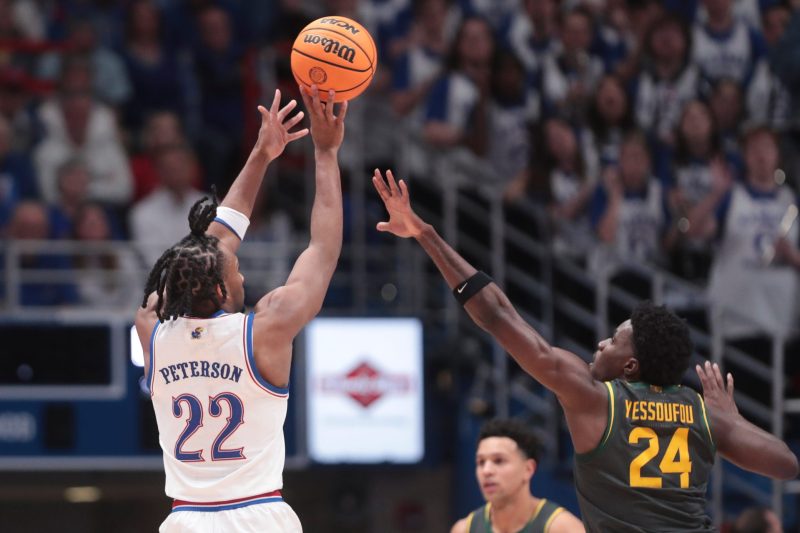
The 2026 NBA Draft features an exceptionally talented top tier with little separation. Darryn Peterson is the current favorite to be selected first due to his size, scoring, and efficiency, but his injury history makes his heavy odds risky. AJ Dybantsa presents the best value as a high-ceiling wing, while Cameron Boozer is a productive longshot.
Beyond the top three, several prospects offer strong value for later lottery picks. Kingston Flemings is a rising two-way guard, Keaton Wagler provides elite shooting and playmaking, and Caleb Wilson is a defensive force whose draft stock hinges on improving his shot. The real betting opportunities may emerge in Top 5 and Top 10 markets for these players.
The 2026 NBA Draft class has a problem most years would kill for: too much talent at the top and not enough separation to feel safe about any of it.
Three freshmen — a scoring guard, a jumbo wing, and a hub big — are all producing like franchise cornerstones against high-major competition. The No. 1 pick market has a clear favorite. The scouting world? Not nearly as convinced. And behind the top trio, a volatile second tier is quietly building the kind of profiles that cash Top 5 and Top 10 futures.
Let’s break down where the market stands, where the value is hiding, and which tickets are actually worth a bet.
#1 Overall Pick — Current Odds at Time Of Writing (BetOnline)
| Prospect | Odds |
| Darryn Peterson (Kansas) | -375 |
| AJ Dybantsa (BYU) | +290 |
| Cameron Boozer (Duke) | +900 |
| Keaton Wagler (Illinois) | +5000 |
| Caleb Wilson (UNC) | +10000 |
| Mikel Brown Jr. (Louisville) | +20000 |
| Nate Ament (Tennessee) | +20000 |
The Race For #1 Pick
1. Darryn Peterson, Kansas (-375)
Peterson is the consensus No. 1 for a reason. He’s a 6’6″ scoring guard with a 6’10.5″ wingspan, and he’s producing like a future star — averaging 20.5 points through 13 games, while shooting 41.9% from three and nearly 80% from the line. The measurements scream modern two-way guard. The stats and efficiency back it up. At his size, the shot-making translates almost immediately to the NBA — there’s no “projection” required on the scoring.
Why He Could Go #1
The combination of size, shooting, and defensive tools is the cleanest plug-and-play profile at the top of this class. Teams drafting first overall want the guy who can score in the league by November. Peterson is that guy. His 41.9% from deep on real volume isn’t a small-sample mirage — it’s paired with free-throw shooting that confirms the touch is real. If the medicals all check out, this is the comfortable pick for most teams.
Why He Doesn’t
Hamstring. Ankle. Thirteen games. That’s the whole counterargument, and it’s not small. Peterson has dealt with a cluster of lower-body issues that have limited his availability, and for a player priced at -375, durability risk is the one thing the market hates to absorb. There’s also a quieter question embedded in the 1.7 assists per game: is he a true lead guard or a scoring engine who needs a table-setter next to him?
Betting Angle
- Verdict: Likely overpriced at -375. He’s the rightful favorite, but you’re laying massive juice on a player whose own injury history is the single biggest variable in the class. Favorites with real medical volatility rarely feel cheap at this number.
- What moves the line: Sustained health through March and a deep Kansas tournament run locks this in. Any missed time — even “precautionary” — and +290 on Dybantsa starts looking like a gift.
2. AJ Dybantsa, BYU (+290)
Dybantsa is the ceiling play. A 6’9 self-creating wing averaging 24.5 points, 6.3 rebounds, and 3.7 assists through 24 games. Big wings who can create and score at volume are the most valuable archetype in today’s NBA. He’s putting up star numbers — the only question is, can he truly be that guy?
Why He Could Go #1
His 3.7 assists per game nearly double Peterson’s 1.7, and he’s doing it as a 6’9 wing who can play above the rim and initiate offense from multiple spots. If front offices decide the #1 pick needs to be a true offensive engine — not just a scorer — Dybantsa’s profile is the one that has the highest ceiling.
Why He Doesn’t
The notes on Dybantsa keep circling the same two words: engagement and consistency. Defensive effort fluctuates. For a player whose entire case rests on “highest ceiling in the class,” those are the exact traits that make GMs nervous about handing over the franchise. The gap between Dybantsa’s best games and his disengaged games is wider than you’d want from a #1 pick.
Betting Angle
- Verdict: Best value in the #1 market at +290. He’s the clear second choice with a legitimate path to first, and the favorite’s biggest vulnerability (health) is the kind of thing that can flip a market overnight. This is a solid bet right now.
- What moves the line: Peterson missing time is the obvious catalyst, but Dybantsa can win this on merit — sustained 25+ PPG scoring with improved defensive engagement and cleaner decision-making in BYU’s tournament run would force evaluators to rethink the hierarchy.
3. Cameron Boozer, Duke (+900)
Boozer is the class’s statistical monster hiding in plain sight. Through 24 games: 23.0 points, 10.0 rebounds, 4.0 assists — on 57.8% from the field, 38.3% from three. A freshman big dropping 23-10-4, stretching the floor, and playmaking out of the post? You don’t see that every year — or even every decade. The Al Horford comps with a dash of Alperen Sengun capture the style: elite footwork, high IQ, finesse over explosiveness.
Why He Could Go #1
If the top two falter — Peterson’s health, Dybantsa’s consistency — Boozer is the obvious safety pick. His efficiency profile is arguably the most NBA-ready in the class. The 38.3% from three at his size legitimizes him as a floor-spacing monster, and 4.0 assists confirm that his playmaking is the real deal. Front offices that get burned chasing perimeter ceilings sometimes pivot to “the guy who’s already producing like a star” — and Boozer is that guy.
Why He Doesn’t
Vertical explosiveness. It’s the concern that keeps +900 from being +300. If Boozer can’t separate and finish against elite NBA athletes above the rim, some teams will always view him as a “very good starter” rather than a franchise cornerstone. The league’s recent history rewards perimeter self-creation at the top of drafts, and Boozer — for all his production — isn’t that guy.
Betting Angle
- Verdict: The most interesting longshot at +900. You’re getting nearly 10-to-1 on a player with legitimate #1 production who only needs a health scare above him or a league-wide “go safe” sentiment to become the pick.
- What moves the line: Continued ACC dominance with the 3P% holding above 36%. A deep Duke tournament run where Boozer is visibly the best player on the floor in high-leverage games would force the conversation.
THE SLEEPER BOARD
These four aren’t winning the #1 race. That’s fine. When Top 5 and Top 10 draft markets open — and they will — these are the names you want circled.
1. Caleb Wilson, North Carolina
Wilson is a 6’10 pogo stick averaging 19.8 points, 9.4 rebounds, and 2.7 assists with a PER of 30.8. The defensive game is legitimate — rim protection, switching ability — and the production says top-five talent. The problem is the 25.9% from three. That number is a flashing red light for any team trying to build a modern offense around him. The free-throw rate (71.3%) offers some hope that the shot develops, but right now, he’s a top-five physical profile with a top-twelve shooting concern.
Betting Angle
- Top 5: Moderate-to-strong. His defensive play is exactly what teams drafting 4 or 5 pay for — the shooting just needs to become “not a liability” rather than “elite.”
- Watch for: Any 3-point improvement into the low 30s, which would be a significant catalyst for him to climb the rankings
2. Kingston Flemings, Houston
Flemings is the class’s biggest riser and the name bettors should bookmark first. A 6’4 downhill lead guard averaging 16.6 points and 5.4 assists on 50.7% from the field and 82.6% from the line. The De’Aaron Fox comp isn’t about ceiling — it’s about style. The burst, the gear-shifting, the rim pressure, the defensive edge — it’s all there. This is exactly the kind of two-way lead guard profile that teams drafting 4 through 8 covet.
Betting Angle
- Top 5: He’s slotted at #5 on consensus boards, and the efficiency + playmaking + defense triple supports it. Flemings should be one of the first names you target to get drafted in the top 5 futures.
- Watch for: If the 3P% holds above 35% through March, and he defends top guards in the tournament, Fleming could firm up as a top-four lock.
3. Keaton Wagler, Illinois
Wagler is a name that keeps climbing in value. At 6’6, he’s averaging 18.5 points, 4.9 rebounds, and 4.3 assists while shooting 43.7% from three. That shooting-plus-playmaking combination at his size — think Tyrese Haliburton stylistically — is catnip for teams looking for a high-IQ star in the making. He has already dropped 46 on Purdue this year. The concern is athletic limitations: can he create separation against top-tier defenders, or is he a “makes everyone better” secondary piece?
Betting Angle
- Top 5: Fringe-to-moderate. Possible if teams fall in love with the shooting and IQ, but he likely needs one of the names above him to stumble.
- Top 10: Strong. The production and shooting efficiency make a fall past 10 very hard to envision.
- Watch for: If Wagler proves he can create off the bounce against top athletes — not just shoot and distribute — the “secondary piece” label gets upgraded to “co-star,” and that’s a top-six player.
7. Mikel Brown Jr., Louisville
Brown is the volatile swing name on this board. A 6’5 shot-making lead guard averaging 17.3 points and 5.1 assists — the skill flashes are real. But the stat card tells a cautionary story: 39.3% from the field, 31.7% from three, 49.0 eFG%. Those are rough efficiency numbers for a player expected to go high in the lottery. Pair that with a lingering back injury that has limited him to 16 games this season, and you’ve got a real cause for concern.
Betting Angle
- Top 5: Unlikely right now. The efficiency has to change substantially for him to climb past the names above him.
- Top 10: Moderate. Consensus boards have him at #6, but the shooting splits introduce real downside risk. He could just as easily slip out of the top ten come draft day so it’s a risk-reward bet with Brown Jr.
- Watch for: Health is everything here. If the back stabilizes and the shooting numbers climb — even modestly, say FG% into the mid-40s with 3P% approaching 35% — Brown’s skill ceiling re-enters the top-seven conversation.
2026 NBA Draft Class
The #1 pick market is a two-horse race with a live insurance policy. Peterson is the favorite for good reasons, but priced like a lock, he isn’t — not with that injury history. Dybantsa at +290 is the sharpest value play at the top. Boozer at +900 is the contrarian swing worth a small stake if you believe front offices will eventually choose production and safety over perimeter ceiling.
But the real edge in this class might not be at #1 at all. When Top 5 and Top 10 futures markets open, names like Flemings, Wagler, and Wilson are where early positioning pays off.