Best NBA All-Star Performances Ever: Top 5 Ranked

Summary
For the first time in 22 years, LeBron James was not an All-Star starter, prompting a look back at the greatest single-game performances in the event’s history. These standout showings are judged within the context of their eras, from the physical, competitive games of the past to the high-scoring modern exhibitions.
The list highlights five iconic performances: Anthony Davis’s 52-point hometown record in 2017; Magic Johnson’s unmatched 22-assist masterclass in 1984; Michael Jordan’s complete two-way dominance with 40 points in 1988; Wilt Chamberlain’s original 42-point, 24-rebound supernova in 1962; and Jayson Tatum’s current record-setting apex of 55 points in 2023. Each left a unique and lasting mark on the All-Star legacy.
LeBron James wasn’t named an All-Star starter for the first time in 22 years. Let that sink in. Since 2005, LeBron has been an automatic lock on All-Star ballots—a fixture of the weekend, a pillar of the event’s marketing, and a player whose presence felt as guaranteed as the halftime show.
So if we’re moving into a new era, it’s the perfect time to look back and ask: what are the greatest All-Star Game performances ever? Not careers. Not highlight reels. Not the best dunks or most memorable All-Star Weekend moments. We’re talking about the best single-game showings—the nights where a player took over an exhibition game and left a mark that’s still talked about decades later.
All-Star Games have changed. Modern editions often feature 300+ combined points, minimal defense, and players openly hunting records. Older games had more physicality, tighter scores, and—at least in theory—more competitive intensity. We’re not doing the “back in my day” routine where modern players get punished just for playing in a high-scoring environment. Instead, we’re judging performances within their context while still respecting what the record book says.
Whether you’re locking in All-Star prop bets for this year’s game or just want to settle an argument about who owns the greatest All-Star performance ever, this is the list that matters.
Let’s get into it.
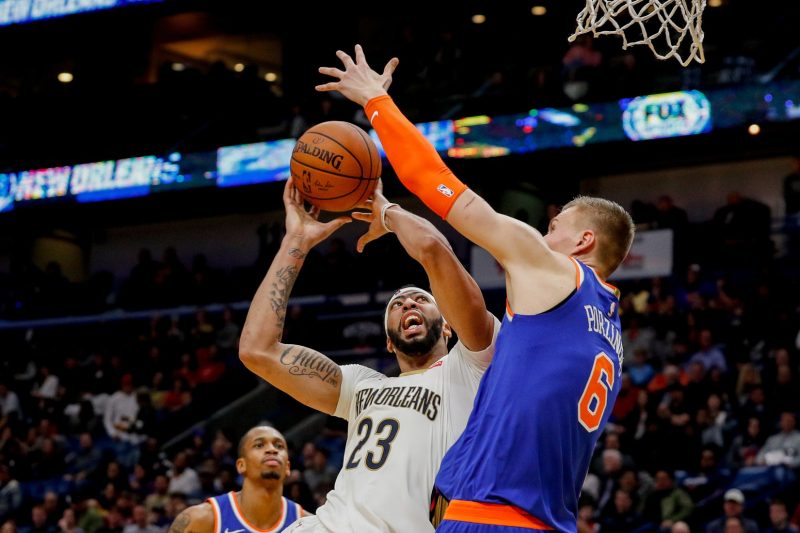
#5 – Anthony Davis, 2017
52 points, 10 rebounds, 2 steals | 26-39 FG | West 192, East 182
This was the modern record-breaker: a hometown star, the Smoothie King Center erupting, and a 55-year-old Wilt Chamberlain benchmark getting shattered in real time.
The 2017 All-Star Game was relocated to New Orleans on short notice after the NBA pulled out of Charlotte over HB2. The result was one of those perfect “thank you, city” moments where the basketball gods lined up just right. Anthony Davis—then 23, already a monster, and very much their guy—turned the entire second half into a historic chase scene.
He finished with 52 points in 32 minutes, shattering Wilt’s 42-point All-Star record that had stood since 1962. He also set records for field goals made (26) and field goal attempts (39). All 52 came from inside the arc—dunks, lobs, putbacks, and mid-range touch. No threes. No free throws. Just pure interior dominance in an era built for guards.
Why He’s Here: Breaking a Wilt record is all-time stuff, and the production rate (1.625 points per minute) is nuclear even by All-Star standards. Yes, the defense was nonexistent, and the record chase was obvious, but the record book doesn’t ask how you got there. Davis delivered the most prolific scoring night in All-Star history—at home, on the biggest stage, with the entire building willing it to happen.
The Caveat: This was peak no-defense All-Star basketball, and his teammates were openly force-feeding him lobs by the fourth quarter. It’s slightly less organic than the performances that follow. But 52 is 52, and nobody breaks a Wilt record by accident.
#4 – Magic Johnson, 1984
15 points, 22 assists | West 145, East 154 (OT)
This is the single greatest playmaking performance in All-Star history. Not the flashiest. Not the highest-scoring. But the purest display of control anyone’s ever had in an exhibition setting—and the record still stands 41 years later.
Magic Johnson orchestrated the West offense for 37 minutes in Denver, finishing with 22 assists—a mark that has survived every pace spike, every offensive explosion, and every modern All-Star Game that’s devolved into a three-point contest. He recorded 13 assists in one half alone, putting him on record pace before the game even went to overtime. The OT period gave him extra runway, sure, but overtime happened because the game stayed competitive. East won 154-145, and Magic controlled nearly every West possession down the stretch.
The stage was stacked: Magic and Kareem for the West. Larry Bird, Isiah Thomas, and Julius Erving for the East. This was the golden era of the NBA, and the game was framed as a floor general duel between Magic and Isiah. Magic won decisively.
Why He’s Here: Assists are hard in All-Star settings. Teammates aren’t running sets. Defense is minimal but unpredictable. Guys are hunting their own shots. To rack up 22 requires not just elite vision but total command of the game’s flow—and the fact that nobody’s come close in four decades tells you how rare this kind of performance is.
The Caveat: Some might equate All-Star greatness with scoring, and Magic’s 15 points won’t leap off the page. But his case is simple: he created offense for everyone, and that’s the hardest thing to replicate in an All-Star Game.
#3 – Michael Jordan, 1988
40 points, 8 rebounds, 3 assists, 4 steals, 4 blocks | 17-23 FG | East 138, West 133
This is the most complete All-Star performance ever. Not the highest-scoring. Not the longest-standing record. But the rare night where a superstar showed up, dominated both ends of the floor, and closed the game like it actually mattered.
Michael Jordan put up 40 points in 29 minutes at Chicago Stadium—his home court, during his MVP and Defensive Player of the Year season, on a weekend where he’d already won the Slam Dunk Contest. The East won 138-133, and Jordan scored 16 of his 40 in the final five and a half minutes, pulling away in a tight game with signature fadeaways, drives, and defensive stops.
The 40 points came two shy of Wilt’s All-Star record, the closest anyone had gotten in 26 years. But the scoring is almost secondary. What separates this performance is the two-way dominance. All-Star Games are usually scorefests. Nobody hunts steals. Nobody blocks shots. Jordan did both — at an elite level — and closed the game for the East when it mattered.
He turned an exhibition game into a genuine showcase of why he was the best player on the planet.
Why He’s Here: It’s the only performance in All-Star history that delivered elite scoring, elite defense, and a legitimate clutch closing stretch. AD and Tatum posted bigger point totals, but neither played defense or closed a competitive game. Magic orchestrated 22 assists but didn’t take over as a scorer. Jordan did everything, and he did it in 29 minutes on 73% shooting.
The Caveat: He didn’t break Wilt’s record, and the 40 points won’t top the leaderboard. But this is the performance that comes closest to replicating what Jordan did in real games—dominance on both ends, a takeover fourth quarter, and a night where he made an exhibition feel like it had stakes.
#2 – Wilt Chamberlain, 1962
42 points, 24 rebounds, 1 assist | 17-23 FG, 8-16 FT | West 150, East 130
This is the original All-Star supernova—the stat line that made people ask if the box score was broken. 42 points and 24 rebounds in 37 minutes, in an era with no three-point line, minimal spacing, and far more physical play than anything we see today. Wilt Chamberlain didn’t just dominate the 1962 All-Star Game. He owned every possession he touched.
The game was played in St. Louis, and the West won 150-130 behind a battle of interior monsters. Bob Pettit—the hometown hero—grabbed 27 rebounds and took home MVP. But Wilt set the scoring record, shooting 17-23 from the field (73.9%) while controlling the glass on both ends.
This wasn’t some outlier performance, either. Wilt was in the middle of his legendary 1961-62 season—50.4 points and 25.7 rebounds per game, the 100-point game, the works. The All-Star showcase was just a microcosm of what he was doing to the entire league that year. The 42 points stood as the All-Star scoring record for 55 years, outlasting every offensive evolution the league threw at it until Anthony Davis finally broke it in 2017.
Why He’s Here: This is possession ownership at its most complete. 42 points means he was the primary scorer. 24 rebounds means he controlled the glass on both ends. And he did it in an era where the paint was clogged, defenses could hand-check, and there were no threes to artificially inflate totals. It’s one of the most imposing stat lines in All-Star history — record-setting points, historic rebounding, and a game that still had some edge.
The Caveat: Wilt didn’t win MVP—Pettit’s 27 rebounds and hometown crowd gave him the edge—and the East lost by 20. But the individual dominance is undeniable. This is the performance that defined All-Star greatness for half a century, and it remains the blueprint for what total interior control looks like in an exhibition setting.
#1 – Jayson Tatum, 2023
55 points, 10 rebounds, 6 assists | 22-31 FG, 10-18 3PT | Team Giannis 184, Team LeBron 175
This was the apex — the all-time All-Star scoring record, a takeover quarter that locked up MVP, and a performance that pulled Tatum away from a loaded field of elite scorers on the biggest stage the exhibition has to offer.
Jayson Tatum dropped 55 points in 35 minutes in Salt Lake City, shattering Anthony Davis’ 52-point mark and Wilt’s 42 before that. He shot 22-31 from the field (71%) and 10-18 from three, adding 10 rebounds and 6 assists for the full stat line. Team Giannis won 184-175, and there was never a question about who was taking home the Kobe Bryant MVP.
The narrative hooks were everywhere. Tatum was going back-and-forth with his own Celtics teammate, Jaylen Brown, who finished with 35 and 14 for Team LeBron. Media framed it as “backyard basketball,” the two stars trading buckets in an exhibition that somehow felt personal. Donovan Mitchell added 40 points on Tatum’s own team, making the MVP race briefly interesting—until Tatum’s third-quarter explosion made it a done deal. It was a statement performance in front of LeBron, Giannis, and every rising star in the league.
Tatum became only the third player ever to score 50+ in an All-Star Game, joining Wilt and Davis. But unlike Davis’ record in a force-fed, no-defense environment, Tatum’s night had moments. The third-quarter takeover. The back-and-forth with Brown. The efficiency that stood out even by modern All-Star standards. He didn’t just break the record—he delivered the full package.
Why it’s #1: It’s the record, and records matter. But it’s also the most complete modern All-Star performance we’ve seen—elite scoring, all-around production, a signature quarter that swung the MVP race, and efficiency that separated him from everyone else on the floor. Tatum didn’t get fed lobs in garbage time. He took over a competitive game and left no doubt. The Caveat: Yes, modern All-Star defense is nonexistent, and the three-point era inflates totals. But nobody else has 55. Nobody else has dominated a quarter like that. And when you pair the record with the efficiency, the supporting stats, and the narrative moment, this is the performance that defines what All-Star greatness looks like in 2023 and beyond.