The 5 Worst Trades in NBA History

Summary
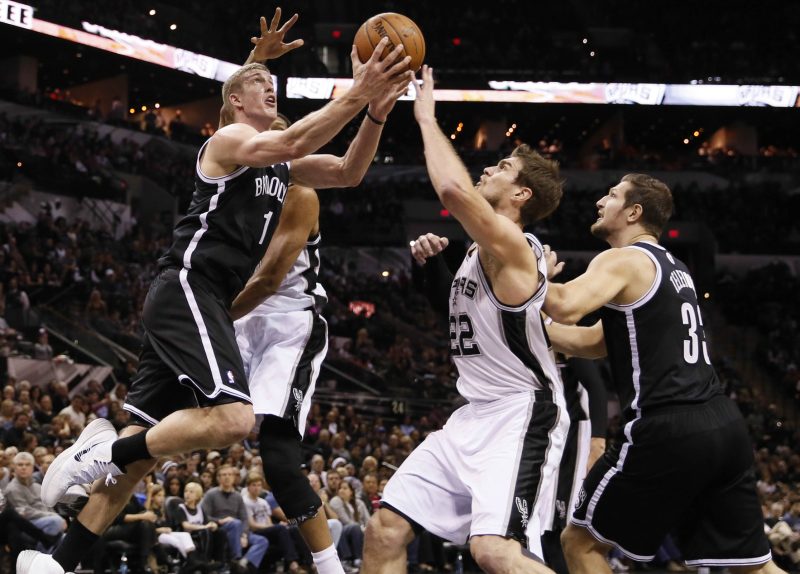
Following the firing of Dallas Mavericks GM Nico Harrison, a look at the five worst trades in NBA history reveals deals that crippled franchises for years. The 2013 Brooklyn-Boston trade stands out, where the Nets acquired aging stars Paul Pierce and Kevin Garnett for a package of draft picks that became Jaylen Brown, Jayson Tatum, and the foundation of Boston’s 2024 championship team. Similarly, the 1996 Charlotte Hornets traded the draft rights to Kobe Bryant for veteran center Vlade Divac, a move that gifted the Lakers a legendary, five-time champion.
Other historic blunders include Milwaukee trading Dirk Nowitzki for Robert Traylor in 1998 and Oklahoma City dealing James Harden to Houston in 2012 over a small financial dispute, costing them a future MVP. The list concludes with the recent, bewildering trade that sent a young Luka Dončić from Dallas to the Lakers for an older, often-injured Anthony Davis, a move that directly preceded Harrison’s dismissal and has been widely panned.
The NBA world woke up Tuesday morning to news that felt inevitable: the Dallas Mavericks had fired general manager Nico Harrison. Less than 10 months after trading Luka Dončić to the Lakers in one of the most bewildering blockbusters in recent memory, Harrison was out. The Mavericks have been bad. And the “Fire Nico” chants that echoed through the American Airlines Center finally got their wish.
It’s the kind of franchise-altering disaster that makes you wonder: where does this rank among the NBA’s all-time worst trades?
So we went down the rabbit hole. We dug through decades of front-office malpractice, draft-night blunders, and “win-now” desperation moves that torched entire franchises. A few trades were rushed. Some were cheap. Some trades were born from impatience. Others from penny-pinching. And a few? From catastrophically bad talent evaluation.
Here are the five worst trades in NBA history—deals that didn’t just alter rosters, but reshaped legacies, destroyed dynasties, and left franchises wandering in the wilderness for years.
Let’s get into it.
1. Brooklyn Nets’ Sell Soul to Boston (June 2013)
The Trade:
Brooklyn Nets received:
Paul Pierce, Kevin Garnett, Jason Terry, D.J. White, 2014 second-round pick
Boston Celtics received:
Keith Bogans, MarShon Brooks, Kris Humphries, Kris Joseph, Gerald Wallace, 2014 first-round pick, 2016 first-round pick (Jaylen Brown), 2017 first-round pick (Jayson Tatum), 2018 first-round pick (traded for Kyrie Irving)
Reasons for the Trade:
Brooklyn owner Mikhail Prokhorov wanted a championship immediately. Not in three years. Not through development. Now. GM Billy King obliged by bringing in Pierce and Garnett alongside Deron Williams, Joe Johnson, and Brook Lopez—a veteran core built to challenge Miami’s Big Three in the Eastern Conference.
Boston, meanwhile, saw the clock strike midnight. Pierce and Garnett were legends, but they were also 35 and 37, respectively. Danny Ainge made the cold-blooded call: trade the icons, stockpile draft picks, and rebuild properly.
Reaction:
Brooklyn fans were electric. The Barclays Center buzzed with championship expectations. Media outlets debated whether the Nets had just leapfrogged the Heat.
Boston fans? Heartbroken but understanding. Pierce had been there for 15 years. Garnett brought the 2008 title. But the writing was on the wall—this was the right move, even if it hurt.
Outcome and Legacy:
The Nets went 44-38 in Year One. They beat Toronto in the first round, then got bounced by LeBron’s Heat in five games. Pierce left in free agency that summer. Garnett was traded shortly after. Brooklyn collapsed into years of irrelevance—with no draft picks to soften the fall.
Boston? They turned those picks into Jaylen Brown (2016) and Jayson Tatum (2017), the cornerstones of their 2024 NBA championship team. The 2018 pick helped land Kyrie Irving. The rebuild wasn’t just successful—it was a masterclass in excellence.
Brooklyn sold their soul to win now. Boston’s patience got them a core dynasty for years to come.
2. Hornets Draft Kobe… Then Trade Him (Draft Night 1996)
The Trade:
Charlotte Hornets received:
Vlade Divac
Los Angeles Lakers received:
Draft rights to Kobe Bryant (13th overall pick)
Reasons for the Trade:
Charlotte needed a veteran center to complement their playoff roster. They had Alonzo Mourning, Glen Rice, and a competitive core—Divac seemed like the missing interior piece to push them over the hump.
But here’s the kicker: the Hornets never wanted Kobe. They drafted him at the Lakers’ request, specifically to facilitate the trade. High school players were still a gamble in 1996—unproven, raw, risky. Why bet on a 17-year-old kid when you can get an established European big man?
For the Lakers, Jerry West was all-in on Bryant. He orchestrated the draft slide, worked with Kobe’s agent to ensure he landed at 13, and cleared cap space by moving Divac. The trade wasn’t just about Bryant—it also freed up room to sign Shaquille O’Neal in free agency. West was assembling his dynasty team over the course of one summer.
Reaction:
Divac initially threatened to retire rather than move to Charlotte. That’s how close this deal came to falling apart. He eventually relented, and the trade went through with minimal fanfare.
Most analysts viewed it as a fair swap: proven veteran for high-upside teenager. Charlotte fans were optimistic about Divac’s impact. Lakers fans were curious but cautious—nobody knew if Kobe would pan out.
The consensus? Reasonable risk for both sides. Nothing close to the earthquake it would become.
Outcome and Legacy:
Kobe Bryant became a five-time NBA champion, 18-time All-Star, league MVP, and one of the Top 5 greatest players in basketball history. He and Shaq delivered three straight titles (2000-2002), then Kobe added two more in 2009 and 2010. Twenty years in a Lakers uniform. 81-point game. Mamba Mentality. Legacy cemented.
Vlade Divac played two solid seasons in Charlotte—12.5 points, 8.7 rebounds per game—then left in free agency. The Hornets got competent production from a good player. The Lakers got an all-time great.
This trade is the ultimate “what if” cautionary tale. Charlotte didn’t just miss on Kobe—they actively chose not to keep him. It’s the draft-night decision that haunts a franchise forever.
3. Bucks Swap Dirk Nowitzki for Robert Traylor (Draft Night 1998)
The Trade:
Dallas Mavericks received:
Draft rights to Dirk Nowitzki (9th overall), draft rights to Pat Garrity (18th overall)
Milwaukee Bucks received:
Draft rights to Robert “Tractor” Traylor (6th overall)
Reasons for the Trade:
Milwaukee wanted size, strength, and certainty. Traylor was a 6’8″, 300-pound bruiser who dominated at Michigan—an NBA-ready body built for rebounding and interior scoring. He looked like a safe bet.
Dirk Nowitzki? A skinny 19-year-old German kid who’d never played a college game. International scouting in 1998 was sparse, and European prospects were widely viewed as projects. The Bucks didn’t even scout Dirk themselves—they’d already agreed to the trade before the draft started. They picked him for Dallas, not for Milwaukee.
Don Nelson, Dallas’ GM, saw something else entirely. He was obsessed with Nowitzki’s shooting touch, footwork, and offensive versatility. A seven-footer who could create his own shot? That didn’t exist yet. Nelson wanted him badly enough to give up the higher pick and throw in Garrity (whom Dallas immediately flipped for Steve Nash—yes, they landed two future MVPs on the same night).
Reaction:
Fans and analysts were split. Traylor had the college pedigree and physical tools—this felt like the “smart” move. Nowitzki was an unknown commodity with a funny jump shot and no track record against elite competition.
Milwaukee fans were excited about Traylor’s rebounding and toughness. Dallas fans trusted Nelson’s vision but had no idea they’d just acquired a franchise legend. The general consensus? Reasonable gamble for both teams.
Outcome and Legacy:
Dirk Nowitzki became a Hall of Famer, a 14-time All-Star, the 2007 MVP, the 2011 Finals MVP, and the NBA’s all-time leading foreign-born scorer. He played 21 seasons in Dallas, won a championship, and revolutionized the power forward position with his shooting and offensive versatility. One of the greatest players ever, no doubt.
Robert Traylor played two seasons in Milwaukee, averaging 4.8 points and 3.7 rebounds per game. He was out of the league by 2005. Solid guy. Never came close to living up to the sixth pick.
Dallas got Dirk and flipped Garrity for Nash. Milwaukee got Tractor Traylor and decades of regret. That’s the gap.
This trade is Exhibit B in the case for international scouting. Nelson saw the future. Milwaukee played it safe. One franchise got a legend. The other got a footnote.
4. Thunder Trade Harden to Rockets (October 2012)
The Trade:
Houston Rockets received:
James Harden, Cole Aldrich, Daequan Cook, Lazar Hayward
Oklahoma City Thunder received:
Kevin Martin, Jeremy Lamb, 2013 first-round pick (Steven Adams), 2013 second-round pick (Alex Abrines), 2014 first-round pick (Mitch McGary)
Reasons for the Trade:
Oklahoma City had a problem most teams would kill for: too much talent, not enough money. They had Kevin Durant, Russell Westbrook, Serge Ibaka, and James Harden—four future stars on the same roster. Something had to give.
Harden wanted a max contract—roughly $60 million over four years. OKC offered $4.5 million less. The gap wasn’t astronomical, but ownership refused to budge. They were a small-market team terrified of the luxury tax, and they’d already committed big money to Durant and Westbrook. Management chose to extend Ibaka over Harden, believing his defense and shot-blocking were more critical than keeping a sixth man who’d struggled in the 2012 Finals.
Houston saw an opportunity. They had cap space, a need for a star, and the willingness to give Harden the max deal and the keys to the franchise. Daryl Morey bet that Harden—averaging 16.8 points off the bench in OKC—could become a focal point. It was a gamble, but one Houston was eager to make.
Reaction:
The trade was polarizing but not universally condemned. Harden had just shot 2-for-10 in the deciding Game 5 of the Finals against Miami. Some analysts questioned whether a streaky shooting guard was worth max money.
Thunder fans were uneasy but trusted the front office. Rockets fans were intrigued but uncertain—was Harden really a number-one option, or just a good role player inflated by OKC’s talent?
The dominant narrative? Financial pragmatism over star hoarding. OKC chose fiscal responsibility. Few predicted what came next.
Outcome and Legacy:
James Harden became a perennial MVP candidate, 2018 MVP winner, 10-time All-Star, and three-time scoring champion. He transformed Houston into a contender, leading them to multiple 50-win seasons, deep playoff runs, and a team that genuinely threatened Golden State’s dynasty run. Put simply, Harden shattered original expectations of him.
Kevin Martin played one season in OKC and left. Jeremy Lamb was a rotation player. Steven Adams became a solid starting center but never an All-Star. Abrines and McGary were non-factors. That team never returned to the Finals. In 2016, Durant left for Golden State. And just like that, the window was gone.
This trade is the ultimate “penny-wise, pound-foolish” disaster. Houston got a superstar for pennies. Oklahoma City got role players and regret. The gap between what Harden became and what OKC received back is one of the widest margins in NBA trade history.
5. Mavs Trade Doncic to Lakers for Davis (Feb 2025)
The Trade:
Los Angeles Lakers received:
Luka Dončić, Maxi Kleber, Markieff Morris
Dallas Mavericks received:
Anthony Davis, Max Christie, 2029 first-round pick
Utah Jazz received:
Jalen Hood-Schifino, two 2025 second-round picks
Reasons for the Trade:
Dallas had a generational superstar in his prime. Then they traded him out of the blue with no warning.
The official reasoning? Concerns about Luka’s conditioning, work ethic, and behavior. Reports suggested he weighed up to 270 pounds and clashed with the front office over his professionalism. GM Nico Harrison emphasized culture and defense, saying the team needed “an All-Defensive center and an All-NBA player with a defensive mindset.”
There was also the financial angle: Luka was eligible for a supermax extension worth $345 million, and Dallas reportedly had doubts about offering it. By trading him, they pivoted to Anthony Davis—an elite two-way player with championship experience—while resetting their entire franchise.
The Lakers? They saw an opportunity to pair a 25-year-old MVP candidate with an aging LeBron James. Dončić could only sign for about $230 million over five years in Los Angeles due to CBA rules, but that didn’t matter. LA got the best player in the deal by a mile.
Reaction:
The trade stunned the league; absolutely no one saw this coming. Luka didn’t ask for a trade. He was the Mavericks — the franchise star, a top-five talent, the future. That’s what made the fallout so jarring. No one saw it coming.
Mavericks fans were furious. “Fire Nico” chants erupted almost immediately. Analysts questioned the logic: trading a 25-year-old perennial MVP candidate for a 31-year-old injury-prone star felt like a panic move disguised as culture correction.
Lakers fans, meanwhile, celebrated landing one of the game’s elite talents. The excitement was palpable—Luka and LeBron on the same roster felt like a superteam in the making.
Outcome and Legacy:
The aftermath has been messy. Davis, as usual, has dealt with multiple injuries since the trade. Luka and the Lakers advanced to the playoffs and got eliminated in the first round by the Wolves. What comes next for both teams remains to be seen.
On November 11, 2025, the Mavericks fired Nico Harrison. Less than 10 months after trading the franchise’s generational cornerstone, he was out. Anthony Davis — who has a close personal relationship with Harrison dating back to their Nike days — now finds his future in Dallas already under question.
The Lakers got younger, more dynamic, and locked in a top-tier playmaker for the next decade. Dallas got an injury-prone big man, a role player, and a distant draft pick. The gap is staggering.
It’s too early for a final verdict, but the early returns are brutal.
This is either the boldest culture reset in modern NBA history or one of the worst trades ever made. Right now? It’s looking a lot more like the latter.
This trade has the potential to climb all the way to #1 if Luka goes on to win multiple championships with the Lakers.