The NBA’s 5 Oldest Active Players in 2025

Summary
The NBA is experiencing a surge in veteran longevity, with several players in their late 30s and early 40s remaining impactful. LeBron James, at 40, continues to be a key contributor for the contending Los Angeles Lakers, solidifying his legacy as a top contender for the greatest of all time. Other stars like Chris Paul and Mike Conley are valued for their high-IQ playmaking and leadership, while veterans like Kyle Lowry and P.J. Tucker provide crucial mentorship and defensive grit. These athletes have collectively redefined career longevity, remaining on playoff-caliber rosters long after their peers have retired.
Their sustained success stems from adapting their games as athleticism wanes. Once explosive scorers, many have evolved into savvy facilitators, defensive specialists, or reliable role players. This group demonstrates that basketball intelligence, professionalism, and a relentless work ethic can extend a career for decades. They are celebrated not just for their accumulated accolades and championships, but for mastering the art of remaining valuable and rewriting the conventional timeline for an NBA player.
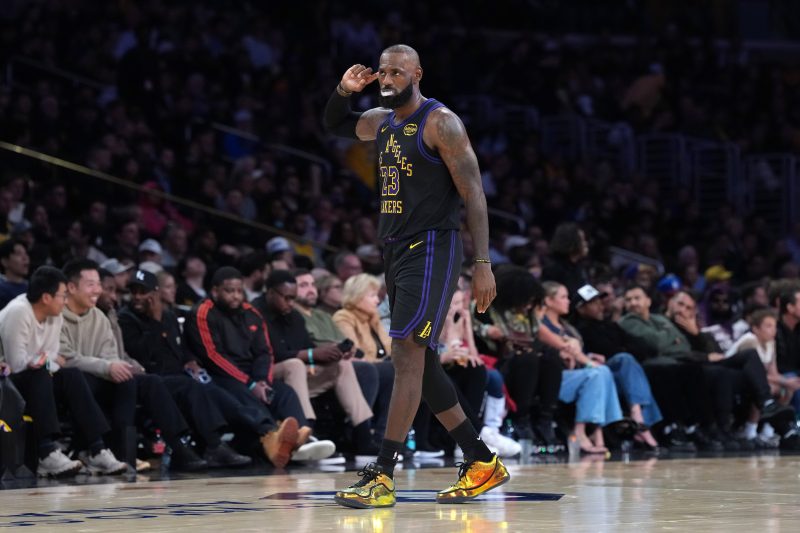
LeBron James made his season debut on November 18th — at 40 years old — dropping 11 points, 12 assists, and a reminder that Father Time still hasn’t caught him.
But he’s not alone. The NBA’s getting older, and a handful of guys in their late 30s and early 40s are still cashing checks, logging real minutes, and contributing to playoff-caliber rosters. Some are stars hanging on to one last run. Others are glue guys who figured out how to stay valuable when the athleticism left. All of them rewrote the book on longevity.
Here are the five oldest active players in the NBA right now — how they got here, what made them great, and why they’re still around when everyone else from their draft class is doing podcast tours.
1. LeBron James (40 yrs old)
Drafted 1st overall in 2003 by Cleveland — the last time a high schooler went number one, and the most hyped prep prospect in basketball history. The pressure was suffocating. The expectations were impossible. He’s spent 22 years making them look reasonable.
Accomplishments
- 4× NBA Champion (2012, 2013, 2016, 2020)
- 4× Finals MVP
- 4× NBA MVP
- 17× All-Star
- NBA’s all-time leading scorer
- 3× Olympic gold medalist
Rookie Season
2003–04, Cleveland Cavaliers
20.9 points, 5.9 assists, 5.5 rebounds per game. Rookie of the Year. All-Rookie First Team.
He dropped 25-6-9 in his NBA debut against Sacramento and never looked back. The Cavaliers improved by 18 wins overnight. This wasn’t a teenager finding his footing — this was a franchise savior arriving fully formed. Scouts worried about his maturity and defensive effort. Those concerns lasted about three weeks.
Peak Year
2005–06, Cleveland Cavaliers (Age 21)
31.4 points, 7.0 rebounds, 6.6 assists on 52% shooting.
This is the season LeBron went from “really good” to “legitimately unstoppable.” He hung 56 on Toronto in March, then 52 on Milwaukee a month later. The Cavaliers won 50 games with a roster held together by duct tape and prayer. He made his first All-NBA First Team. The league belonged to him now — he just hadn’t won the paperwork yet.
Now & Legacy
2024–25, Los Angeles Lakers
Still starting and still playing close to 30+ minutes. Still a big part of the offense.
He made his season debut on November 18th at age 40, posting 11 points and 12 assists in a win over Utah. He’s no longer the Lakers’ centerpiece — that’s Luka Doncic now — but he remains the connective tissue, the high-IQ distributor who makes everything work. Los Angeles is contending in the West, and LeBron’s fingerprints will still be on every win.
His legacy? Settled. He’s the all-time leading scorer, a four-time champion across three franchises, and the most durable superstar the league has ever seen. The debate isn’t whether he’s top three anymore. It’s down to him and Jordan for the top spot — and at this point, that’s undeniable.
2. Chris Paul (40 yrs old)
Drafted 4th overall in 2005 by New Orleans — the safest pick in the draft, the smartest player in the room, and the guy who’s spent two decades proving that 6’0″ doesn’t mean a damn thing if your brain works faster than everyone else’s legs.
Accomplishments
- 12× All-Star
- 9× All-NBA (4× First Team)
- 9× All-Defensive Team (7× First Team)
- 2013 All-Star MVP
- NBA 75th Anniversary Team
- 2× Olympic gold medalist (2008, 2012)
- 3rd all-time in assists, top-5 all-time in steals
Rookie Season
2005–06, New Orleans Hornets
16.1 points, 7.8 assists, 5.1 rebounds, 2.2 steals per game. Rookie of the Year. All-Rookie First Team.
He debuted with a near triple-double and never let up. Paul led all rookies in scoring, assists, steals, and double-doubles — an absurd sweep that made the Deron Williams comparisons feel quaint by Christmas. The Hornets were displaced by Hurricane Katrina, playing home games in Oklahoma City, but CP3 gave them an identity: relentless, cerebral, and impossible to shake.
Peak Year
2008–09, New Orleans Hornets (Age 23)
22.8 points, 11.0 assists, 5.5 rebounds, 2.8 steals. 50/36/87 shooting splits.
This was Chris Paul at his most unstoppable. He led the league in assists and steals — a feat requiring both genius-level court vision and absolutely unhinged defensive intensity. He finished second in MVP voting, dropped 42 and 10 against Golden State, and hung 21 assists on the Lakers in a single night. That Hornets roster had no business sniffing 49 wins. But Chris Paul orchestrated every possession like a maestro — turning chaos into control.
Now & Legacy
2024–25, Los Angeles Clippers
Back where “Lob City” started, but in a completely different role. Paul’s averaging 2.3 points and 3.2 assists in 13 minutes per game off the bench. He’s not running the show anymore — he’s teaching it. The Clippers are rebuilding, and CP3 is the insurance policy: a steady hand when rotations collapse, a voice that commands respect in timeouts, the guy who knows every wrinkle of every scheme.
His legacy? Locked. He’s a top-five point guard ever, maybe top-three depending on how much you value pure craft. The only asterisk is the missing ring — he dragged Phoenix to the Finals in 2021 and came two wins short. But his résumé speaks for itself: nine All-Defensive selections, four All-NBA First Teams, and 21 years of proving that basketball IQ beats athleticism every single time.
3. Kyle Lowry (Age 39)
Drafted 24th overall in 2006 by Memphis — undersized, underrated, and carrying a chip the size of Tennessee. He spent the next 19 years turning that late first-round slight into a Hall of Fame career built on spite, grit, and an unshakeable refusal to lose quietly.
Accomplishments
- NBA Champion (2019)
- 6× All-Star
- All-NBA Third Team (2016)
- Olympic gold medalist (2016)
- Toronto Raptors all-time leader in assists, steals, and triple-doubles
Rookie Season
2006–07, Memphis Grizzlies
5.6 points, 3.2 assists, 1.4 steals in 17.5 minutes per game.
Lowry’s rookie season lasted 10 games before a wrist injury ended it. But those 10 games told you everything: relentless on-ball defense, a 10-rebound debut, and the kind of energy that makes coaches trust you even when the box score doesn’t pop. He wasn’t scoring. He wasn’t running the offense. He was just everywhere, disrupting possessions and diving for loose balls like his contract depended on it.
Peak Year
2016–17, Toronto Raptors (Age 30)
22.4 points, 7.0 assists, 4.8 rebounds, 1.5 steals. 46/41/82 shooting splits.
This was Lowry fully realized: an All-NBA guard who could score, facilitate, defend, and take over fourth quarters without flinching. He dropped 41-9-7 on Cleveland, routinely torched defenses with his three-point shooting, and became the engine for a 51-win Raptors team that finally looked like a legitimate contender. Toronto’s offense lived and died on his decision-making, and he rarely made the wrong call.
Now & Legacy
2024–25, Philadelphia 76ers
3.0 points, 1.0 assist in 3 minutes per game. Deep reserve. Mentor. Veteran voice.
Lowry’s basically retired, but he hasn’t filed the paperwork yet. He’s appeared in one game this season, logged three minutes, and exists primarily as a locker-room presence for Philly’s younger guards. The production is gone, but the value isn’t — teams don’t carry 39-year-old point guards unless their leadership outweighs the roster spot.
His legacy? Cemented in Toronto. He’s considered the greatest Raptor ever, the heartbeat of their 2019 championship run, and the guy who turned a franchise with a losing mentality into perennial contenders. Six All-Star appearances, an Olympic gold medal, and a ring he earned the hard way. When he retires, Springfield’s waiting — and Toronto’s retiring his number immediately.
4. P.J. Tucker (Age 40)
Drafted 35th overall in 2006 by Toronto — played 12 games, got waived, and spent the next five years grinding through Israel, Ukraine, Germany, Italy, Greece, and Puerto Rico. Most second-rounders would’ve quit. Tucker turned it into a masterclass in stubbornness, returned to the NBA at 27, and carved out a 13-year career as the guy championship teams call when they need someone who refuses to lose.
Accomplishments
- NBA Champion (2021, Milwaukee Bucks)
- 900+ NBA games played
- Regarded as one of the toughest defenders of his generation
- Multiple European championships during international career
Rookie Season
2006–07, Toronto Raptors
1.8 points, 1.4 rebounds in 12 games.
Tucker barely played, got cut, and disappeared. But he didn’t quit — he went overseas and became a star. Big 12 Player of the Year at Texas, then MVP-level performances in Israel and Ukraine. By the time he returned to the NBA in 2012 with Phoenix, he wasn’t the same player. He was harder, smarter, and impossible to move in the paint.
Peak Year
2013–14, Phoenix Suns (Age 28)
9.4 points, 6.5 rebounds, 1.4 steals. Started all 82 games. Shot 39% from three.
This was Tucker’s breakout. Phoenix won 48 games with a roster nobody believed in, and Tucker was the connective tissue — guarding wings, crashing boards, and knocking down corner threes at an elite clip. He wasn’t flashy. He just did everything that doesn’t show up on SportsCenter but wins you basketball games. Coaches started circling him in free agency. Contenders took notice.
Now & Legacy
2024–25, New York Knicks
3.0 points, 2.7 rebounds in 19 minutes per game across three appearances.
Tucker’s hanging on by a thread. He’s averaging single-digit minutes when he plays at all, and his role is purely veteran presence at this point. The Knicks are keeping him around for his locker-room voice and the off-chance they need a bruiser in a playoff scrap, but the production is gone. This is likely his last season.
His legacy? Cult hero status. Tucker won a ring with Milwaukee in 2021, playing critical minutes as their small-ball five and defensive enforcer. He’s the textbook example of perseverance — a guy who got cut, rebuilt himself overseas, and came back to become indispensable to contenders. Not a Hall of Famer, but a champion and a legend in the “guys who just win” pantheon.
5. Mike Conley (Age 38)
Drafted 4th overall in 2007 by Memphis — one year removed from Ohio State’s NCAA title game run, and ready to lead a franchise that needed someone steady, smart, and stubborn enough to turn “Grit and Grind” from a slogan into an identity. He did exactly that for a decade, became the most underrated point guard of his generation, and is somehow still starting playoff games at 38.
Accomplishments
- NBA All-Star (2021)
- NBA All-Defensive Second Team (2013)
- Multiple NBA Sportsmanship Awards
- Memphis Grizzlies all-time leader in assists and steals
- Top 25 all-time in NBA career assists
Rookie Season
2007–08, Memphis Grizzlies
9.4 points, 4.2 assists, 2.6 rebounds in 27 minutes per game. All-Rookie Second Team.
Conley started 46 games as a 20-year-old running a rebuilding franchise’s offense. He wasn’t explosive. He wasn’t flashy. But he was poised, disciplined, and almost never made the kind of backbreaking mistake that sinks young point guards. A 20-point performance against Houston in March showed flashes of scoring punch, but his real value was already clear: he controlled pace, protected the ball, and made everyone around him better.
Peak Year
2016–17, Memphis Grizzlies (Age 29)
20.5 points, 6.3 assists, 3.5 rebounds, 1.3 steals. 46/41/86 shooting splits.
This was Conley fully unleashed. Memphis leaned on him as their primary scorer, and he delivered with surgical efficiency — elite three-point shooting, relentless pick-and-roll execution, and clutch shot-making when the game tightened. He dropped a career-high 38 points in Game 4 of the 2017 playoffs against San Antonio, dragging Memphis to a win in a series they had no business competing in.
Now & Legacy
2024–25, Minnesota Timberwolves
6.1 points, 3.5 assists, 2.0 rebounds in 20 minutes per game. Still starting.
Conley’s in his 18th season, and Minnesota still trusts him to run the show. He’s not carrying the offense anymore — Anthony Edwards handles that — but he’s the steadying presence that keeps the Wolves organized. He’s playing meaningful minutes on a contender at 38. That’s not an accident.
His legacy? The most underrated floor general of the 2010s. He never got the All-Star nod he deserved in Memphis. But anyone who watched knew — Conley was the engine of “Grit and Grind,” the franchise leader in assists and steals, and the guy who made winning plays for nearly two decades without ever asking for the spotlight.
He finally got his All-Star nod in 2021 with Utah, a long-overdue acknowledgment of what everyone in the league already knew. When he retires, he’ll be remembered as the consummate pro — no drama, no shortcuts, just excellence and respect.