The Top 5 NBA Players Under 25 (2026 Edition)

Summary
The NBA’s brightest young stars are already established, franchise-defining players, not mere prospects. Victor Wembanyama leads this group with historic two-way dominance, while Anthony Edwards is a premier scoring wing and face of the league. Cade Cunningham orchestrates a top team as a complete floor general, and Chet Holmgren is a foundational two-way pillar for the West’s best squad. Alperen Şengün rounds out the top five as a unique offensive hub from the center position.
These players are the league’s present, driving winning teams and producing at All-NBA and MVP levels. Their continued development points toward an era where several could become all-time, era-defining legends.
All-Star Weekend’s almost here, and the Rising Stars game is where we get our first real glimpse of who’s next. But here’s the thing: the future isn’t coming. It’s already here.
The NBA’s best players under 25 aren’t developmental projects or “high-ceiling prospects”; they’re franchise centerpieces, playoff drivers, and legitimate MVP candidates right now.
We’re ranking the five best players under 25 based on what they’re doing right now, not just talent or potential. That’s what separates real production from projection in the serious NBA best players under 25 rankings.
That means star role and offensive load, team success, two-way impact, efficiency, roster fit, and whether they’ve got the profile to be marketed as a face of the league.
Let’s get into it.
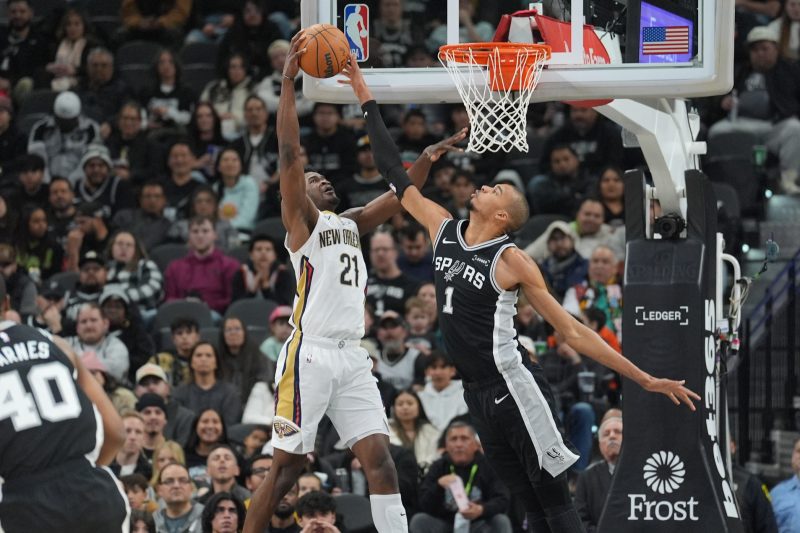
1. Victor Wembanyama — San Antonio Spurs
The Franchise Alien, Age 21
Victor Wembanyama isn’t the future; he’s the present with a ceiling no one’s seen before.
The Numbers:
- 24.2 PPG, 11.1 RPG, 2.8 BPG
- 50.6% FG, 37.7% from three on real volume
- 27.6 PER (5th in the league)
- Leading the NBA in blocks per game for the second straight year
That’s not developmental production, that’s All-NBA stuff wrapped in a 7’4″ frame.
Why He’s the Engine:
The Spurs aren’t just building around him; they’re already watching him warp games on both ends. He’s the offensive hub in crunch time, the defensive eraser on every possession, and the reason San Antonio’s win total is climbing faster than anyone expected. Wembanyama brings the rarest archetype in basketball: a two-way mega big who doesn’t need scheme to dominate. He spaces the floor, collapses help, and still swats everything at the rim.
The Trajectory:
There’s no “in a few years” qualifier here. He’s already producing at an MVP-caliber level, and the only question left is how many of those trophies he’ll collect. The league’s never seen this combination of size, skill, and impact. If health holds, his trajectory isn’t just All-Star, it’s generational.
2. Anthony Edwards — Minnesota Timberwolves
Next-Gen Wing Superstar, Age 23
Anthony Edwards is the closest thing the league has to an heir apparent for the “face of the NBA” throne.
The Numbers:
- 29.7 PPG, 5.2 RPG, 3.6 APG
- 49.9% FG, 41.0% from three, 79.3% FT
- 22.7 PER on a 28-19 Wolves team
- 3x All-Star, 2x All-NBA (both Second Team)
That’s the modern wing blueprint: rim pressure, high-volume threes, and the efficiency to back it all up.
Why He’s the Engine:
Edwards is a true No. 1 on a winning team, regularly putting up 30 a night. And it’s not just volume, he’s a closer. His combination of athleticism, shot-making, and highlight gravity makes him appointment television. The league already sees him as a marquee name, and the All-NBA résumé at 23 proves it’s not just hype.
The Trajectory:
He’s got the personality, the scoring pop, and the winning context. If he tightens up the playmaking reads and stays locked in defensively every night, he’s not just a star, he’s a first-team All-NBA lock and an MVP candidate. The ceiling isn’t potential anymore, it’s “how many times does he finish top-3 in MVP voting?”
3. Cade Cunningham — Detroit Pistons
The Floor General Who Runs Everything, Age 23
Cade Cunningham is the most complete lead-guard engine in the under-25 class, and it’s not particularly close.
The Numbers:
- 25.3 PPG, 5.7 RPG, 9.8 APG
- 45.7% FG, 81.9% FT, 56.3% TS
- 21.5 PER on a 34-11 Pistons team sitting 1st in the Central
- Leads the league in assists, All-NBA Third Team (2024-25)
That’s 25-and-10 production on a top seed. That’s franchise centerpiece stuff.
Why He’s the Engine:
Cunningham controls everything. He’s not just scoring at volume; he’s orchestrating the entire offense, creating shots for teammates, and dictating pace. Detroit’s surge to the top of the standings isn’t happening without him running the show. He’s the classic prototype: a 6’6″ point guard with the size to post up, the vision to carve up defenses, and the scoring gravity to punish help. The ball’s in his hands every possession that matters, and the Pistons are winning because of it.
The Trajectory:
If you’re building a contender from scratch, this is the blueprint: a big lead guard who can score, pass, and control games in the half-court. The shooting efficiency, particularly from three (32.6%), is the swing skill that separates “All-Star” from “MVP candidate.” If that number climbs into the high 30s, Cunningham isn’t just a top-10 player; he’s a top-5 one.
4. Chet Holmgren — Oklahoma City Thunder
The Unicorn Big, Age 22
Chet Holmgren isn’t just along for the ride on the West’s best team; he’s one of the reasons they’re there.
The Numbers:
- 17.9 PPG, 8.7 RPG, 2.3 BPG
- 57.1% FG, 37.5% from three, 62.8% eFG
- 21.8 PER on a 38-10 Thunder team (best record in the West)
- 2025 NBA Champion, All-Rookie First Team
That’s the modern big blueprint: rim protection, floor spacing, and elite efficiency without needing plays called for him.
Why He’s the Engine:
He protects the paint, alters shot selection, and punishes defenses with a stretch-big skill set that fits any lineup. On a juggernaut, he’s not a passenger; he’s a core pillar. His defensive presence anchors OKC’s scheme, and his shooting danger creates the spacing that unlocks everything else. He may not be the primary creator (that’s SGA), but his two-way value at the most important defensive position makes him indispensable.
The Trajectory:
Holmgren is already in DPOY conversations and on the All-Defense radar at 22. This archetype is the cheat code every contender wants: rim protection paired with real three-point shooting. If he expands his self-creation package and stays healthy for full 70-game seasons, he’s not just a co-star, he’s a perennial All-NBA lock.
5. Alperen Sengun — Houston Rockets
Point-Center Hub, Age 22
Alperen Sengün has the rarest offensive profile among young bigs: a true point-center who runs the offense from the post.
The Numbers:
- 21.5 PPG, 9.0 RPG, 6.4 APG
- 51.8% FG, 69.4% FT, 57.2% TS
- 22.1 PER on a 28-16 Rockets team
- +6.0 Net Rating (118.9 OffRtg / 112.8 DefRtg)
- 28.4% assist rate, 2025 All-Star
That’s not just big man production, that’s offense-builder stuff.
Why He’s the Engine:
Sengun isn’t just scoring and rebounding. He’s orchestrating. The offense runs through him in the post, and his playmaking draws defenders and creates easy looks, without needing a guard to control every possession. He punishes doubles, finds cutters, and turns Houston’s half-court sets into high-efficiency possessions. The +6.0 Net Rating on a legitimate playoff team is the clincher: he’s not just putting up numbers, he’s the engine driving a winning team.
The Trajectory:
Sengun already has All-Star credibility and an All-NBA vote share that shows the league sees him as a serious player. The questions are about spacing (29.5% from three limits, some matchups) and defensive versatility in playoff environments. But the offensive hub status is undeniable. If he adds even marginal outside shooting and continues anchoring the Rockets, he’s not just a complementary star; he’s the centerpiece who can run an offense from the five.
Honorable Mentions
These two were the toughest cuts; both have legitimate cases for the top five.
Tyrese Maxey — Philadelphia 76ers, Age 24
Maxey was the hardest name to leave off this list. The offensive case is undeniable: 28.4% usage rate, 59.5% TS, and the ability to carry a team’s shot creation night after night. He has the speed, shooting, and confidence of a true modern star guard, and his numbers show the workload of a primary option. What held him just outside the top five is team context (Philly’s 25-21 record) and comparative impact signals, his +1.5 Net Rating doesn’t match the on-court dominance of the final spot. But make no mistake: if the Sixers’ situation stabilizes and his two-way impact jumps, Maxey is one of the most likely players here to force his way into the top tier.
Scottie Barnes — Toronto Raptors, Age 23
Barnes is the ultimate do-everything connector: 19.5 PPG, 8.3 RPG, 5.6 APG, plus 1.5 blocks and 1.3 steals. He fills gaps everywhere, and his +3.2 Net Rating on a 29-19 Raptors team proves the two-way versatility isn’t just box score decoration, it’s a winning impact.
What keeps him in honorable mention rather than the top five is usage and role: his 23.4% usage rate isn’t quite “carry the team” territory yet, and the scoring volume doesn’t match the true superstars above him. Barnes has the all-around game to climb into the top five conversation eventually; he’s the Swiss Army knife every contender wants.
The Future Is Already Here
The Rising Stars game is a showcase, but let’s be clear: the five names above aren’t prospects anymore. They’re not “developing.” They’re not “almost ready.”
They’re running the league right now.
These aren’t the stars of tomorrow; they’re the stars of today, and the scary part is they’re all still getting better. LeBron was 25 once. So was Giannis. So was Durant. This group has at least two names who’ll be in that conversation, the all-time, era-defining, top-tier legends, when it’s all said and done.