Who Will Win NBA Sixth Man of the Year? Odds, Best Bets, and Candidate Breakdown

Summary
The NBA’s Sixth Man of the Year race features several strong contenders. Naz Reid is the clear favorite with a clean case as a productive reserve on a winning team, though his odds offer little betting value. Reed Sheppard possesses strong late-season momentum, but his multiple starts complicate his candidacy.
Keldon Johnson emerges as the best value bet, fitting the historical mold of an efficient, pure bench player on a successful team. Jaime Jaquez Jr. offers a versatile stat line, while Tim Hardaway Jr. is a longshot. Ultimately, while Reid is the safest pick to win, Johnson’s profile and attractive odds present a compelling alternative based on historical voting trends.
The NBA Sixth Man of the Year race always sounds simple until you actually look at the board. The favorite usually makes sense, the longshots usually look fun, and somewhere in the middle, there’s usually one guy who feels like the real betting sweet spot.
That’s what this year’s race looks like right now.
Naz Reid has the cleanest favorite case on the NBA 6MOTY odds. Reed Sheppard has the late-season buzz. Keldon Johnson looks like the value play if you care about role, efficiency, and team success. Jaime Jaquez Jr. has the all-around stat line that makes him hard to ignore. And then you’ve got the deeper names like Tim Hardaway Jr., Ajay Mitchell, and Ayo Dosunmu, who all have at least one thing going for them but probably need a lot to break right.
Let’s go player by player, break down why each guy can win, what could wreck the case, and how each profile stacks up against the kinds of Sixth Man winners voters usually go for.
1) Naz Reid – Timberwolves (+105)
Why he can win
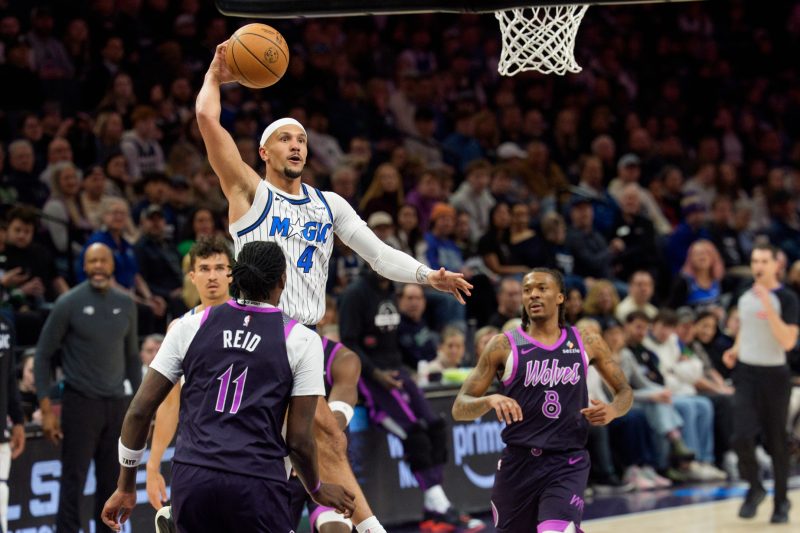
Naz Reid looks like the favorite because his case is clean, almost across the board. He’s putting up 13.9 points, 6.4 rebounds, and 2.4 assists per game, he’s only made two starts, and he still gives voters the kind of modern bench profile they usually love: scoring, rebounding, three-point shooting, and enough defensive production to feel like more than just a bench gunner.
Reid’s numbers are better in wins, which helps sell the idea that this isn’t just empty bench scoring. He looks like a real contributor on a good team, and that usually plays well in this market.
What holds him back
The biggest issue is the price. At +105, the market already knows how strong the case is, so there isn’t much room for hidden value.
The other concern is the late-season trend. His scoring and three-point shooting have dipped after the All-Star break, and that matters because this award often swings toward guys who either stay hot or get hotter down the stretch.
Best historical comp
The easiest comp is honestly Naz Reid from last year. More broadly, he fits the same kind of mold as recent winners who were productive reserves on winning teams with easy-to-understand roles.
Betting verdict
Naz Reid feels like the most likely winner, but not necessarily the best bet. If you just want the safest name, this is the guy. If you’re trying to beat the market, the number feels a little tight.
2) Reed Sheppard – Rockets (+275)
Why he can win
Reed Sheppard has the strongest momentum case in the field. He’s at 13.5 points, 3.3 assists, and 1.4 steals per game, and his post-All-Star production has jumped in a way that really stands out. That kind of late charge matters in award markets.
He also fits the modern bench guard mold pretty well. He can score, he can make plays, he shoots close to 40 percent from three, and he has the kind of rising-buzz profile that bettors and voters both love.
What holds him back
The issue is that his role isn’t nearly as clean as Naz Reid’s or Keldon Johnson’s. Sheppard has already made 10 starts, and that creates real Sixth Man optics trouble. The better he plays, the more he starts to look like a starter who happens to come off the bench sometimes. That’s great for his actual value, but it muddies the award case.
Best historical comp
He feels like a mix of Payton Pritchard’s late-season buzz and Tyler Herro’s role blur. The momentum is very real, and the scoring-guard archetype absolutely has history in this market.
Betting verdict
Sheppard is the heat-check pick. If you want the guy with the strongest late push, this is your ticket. But because of the starts he’s had already and could still garner, he feels more volatile than the odds suggest.
3) Keldon Johnson – Spurs (+500)
Why he can win
Keldon Johnson might have the strongest value case on the board. He’s averaging 12.9 points and 5.6 rebounds, has made zero starts, and owns the cleanest bench identity among the top contenders. He’s shooting 53.6 percent from the field, 37.3 percent from three, and carries a 62.9 true shooting percentage, which is excellent for a reserve scorer. Add in strong team success, and you’ve got a profile that checks a lot of the same boxes recent winners have checked.
What holds him back
The obvious pushback is the post-All-Star dip. Keldon’s production has slipped after the break, and that’s not ideal for an award where late momentum tends to matter, but there is still time to turn it around. He also doesn’t have the flashiest raw scoring case. Compared to some of the other names, his résumé wins more on efficiency and role purity than on wow-factor counting stats.
Best historical comp
He feels closest to the Malcolm Brogdon / Payton Pritchard lane: efficient reserve, winning team, easy role to understand, good enough production without needing to dominate the scoring race.
Betting verdict
Keldon looks like the best value bet on the board to me. He may not be the most likely winner, but the price feels better than the gap between him and the favorite suggests.
4) Jaime Jaquez Jr. – Heat (+650)
Why he can win
Jaime Jaquez Jr. has maybe the most well-rounded box score in the field. He’s putting up 15.3 points, 5.3 rebounds, and 4.6 assists, and that kind of all-around production makes his case easy to respect. He’s also only made one start, so the Sixth Man profile is still clean enough. If voters want to reward a reserve who does more than just score, Jaquez has a real argument.
What holds him back
The biggest issue is that his case doesn’t really dominate in any one category. His three-point shooting is weak compared to the other main candidates, his team context is not as strong as the best names on the board, and his efficiency is good but not great.
Best historical comp
He feels like an all-around combo candidate in the Brogdon/Herro family, but without the same shooting punch those guys had when they won. That makes him interesting historically, but not a perfect fit.
Betting verdict
Jaquez is a live underdog dart, especially if you like versatile stat lines, but he still feels like more of a secondary betting option than a top target.
5) Tim Hardaway Jr. – Nuggets (+2000)
Why he can win
Tim Hardaway Jr. has the veteran bench-scorer case. He’s averaging 13.7 points per game, shooting 40.2 percent from three, and brings one of the best pure shooting résumés on the board. If the case is built around spacing, scoring, and being a reliable reserve gunner on a good team, there’s at least something here.
What holds him back
The all-around production is light. The rebounding is low, the passing is minimal, and once the shot cools off, the résumé gets thin in a hurry. That’s a problem because his post-All-Star trend is already going the wrong way. For a player whose case depends so much on shooting, that late dip is going to be hard to ignore.
Best historical comp
He’s got some Jordan Clarkson-style bench gunner DNA, but the overall stats are weaker, and the role impact doesn’t feel as loud.
Betting verdict
Hardaway is a respectable longshot, but not likely to have a real shot unless some of the top contenders fall off dramatically.
What History Says About the Best 6MOY Award Bet
Recent Sixth Man of the Year winners usually follow a pretty clear script. They score enough to matter, play for good teams, stay productive in a clearly defined bench role, and either shoot it well or catch fire late in the season. That’s why names like Payton Pritchard, Naz Reid, Malcolm Brogdon, Tyler Herro, and Jordan Clarkson all made sense when they won. The details changed, but the formula stayed mostly the same: productive reserve, winning team, clean role, easy story for voters to buy.
That’s also why this year’s board starts to separate once you line it up against history:
Naz Reid fits the cleanest winner template, which is why he’s the favorite.
Reed Sheppard has the strongest late-season momentum, but the starts make his case a little messier.
Keldon Johnson is the one history keeps nudging back toward, because he checks so many of the right boxes at a better price: true bench role, strong efficiency, good team, and a profile that looks a lot like the kind of player voters have rewarded before.
So if you’re just trying to pick the most likely winner, Reid is the safe answer. If you’re looking for the best betting angle, history suggests Keldon Johnson might be the smarter play — especially since Naz Reid won it recently, and voters rarely reward the same storyline twice in such a short span.